Fermented Beetroot Kvass: Easy Probiotic Drink
How to make beetroot kvass at home. A simple, probiotic-rich fermented drink that takes 5 minutes of prep and supports gut health and detoxification.

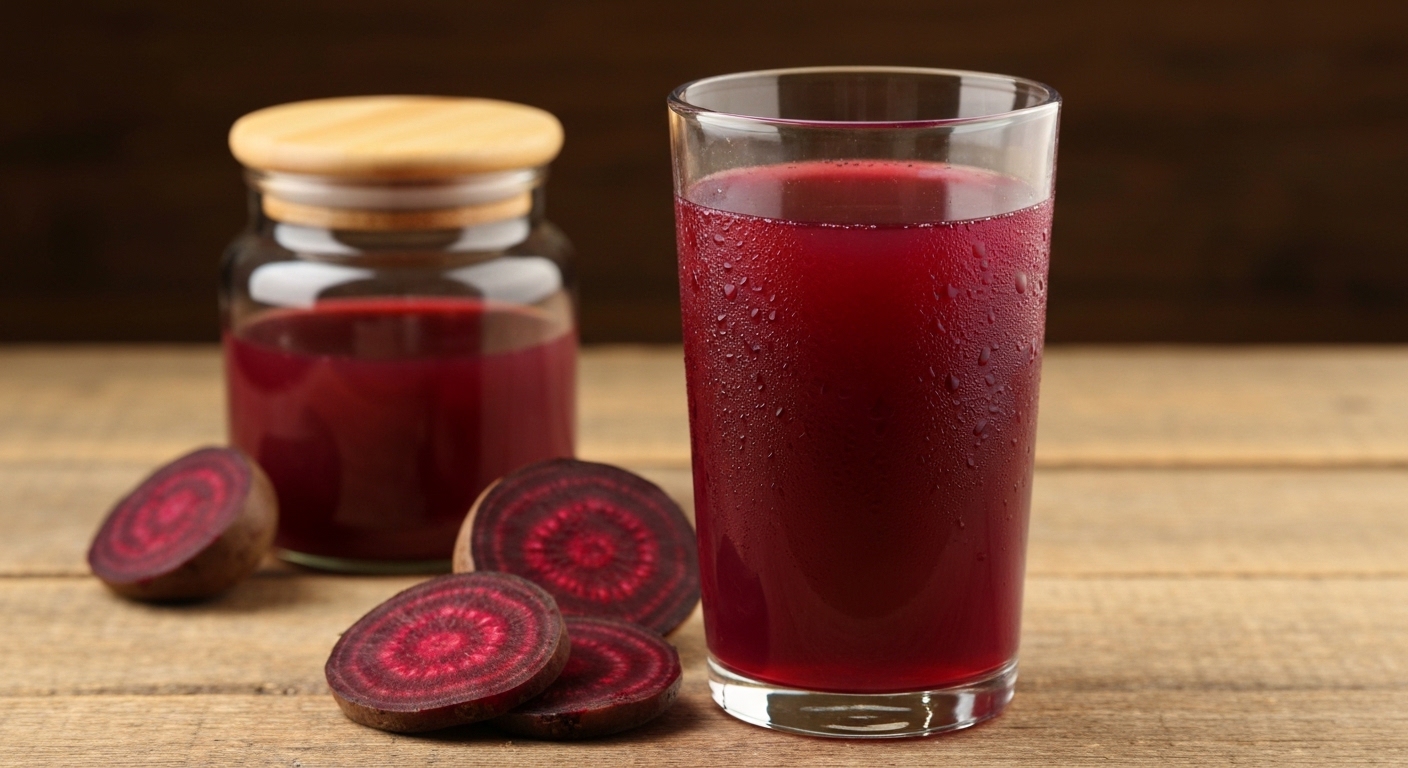
Beetroot kvass is one of the simplest fermented drinks you can make. Three ingredients, five minutes of work, and two to three days of waiting. The result is a tangy, earthy, probiotic-rich drink that supports gut health and provides the nutritional benefits of beets in an easily digestible form.
This isn’t fancy health food. Kvass has been a staple drink in Eastern European households for centuries. It was the everyday beverage before refrigeration made sodas ubiquitous.
What You Need
- 3 medium beets, peeled and cubed (about 1-inch pieces)
- 1 tablespoon sea salt
- Filtered water (enough to fill a quart jar)
- 1 quart (1 liter) glass mason jar
That’s it. No starter culture, no whey, no special equipment.
How to Make It
Step 1: Prepare the Beets
Peel 3 medium beets and cut them into roughly 1-inch cubes. Don’t grate them. Grated beets ferment too quickly and produce alcohol instead of the tangy, probiotic drink you want.
Step 2: Combine
Place the beet cubes in the mason jar. Add the salt. Fill with filtered water, leaving about an inch of headspace at the top. Stir to dissolve the salt.
Step 3: Cover and Ferment
Cover the jar with a cloth or coffee filter secured with a rubber band. Place in a room-temperature spot out of direct sunlight.
Step 4: Wait
Day 1. Not much happening yet. The salt is creating an environment where beneficial lactobacillus bacteria (naturally present on the beet skin) can thrive while inhibiting harmful bacteria.
Day 2. You may see small bubbles forming. The liquid starts turning deep red as the beets release their pigment.
Day 3. Taste it. If it’s tangy and slightly earthy, it’s ready. If it’s still mostly salty, give it another day. In warmer climates, it may be ready in 2 days.
Step 5: Strain and Store
Strain the liquid into a clean jar. Refrigerate. The kvass keeps for about 2 weeks in the refrigerator.
Second ferment. You can refill the jar with the same beet cubes, add more salt water, and ferment again for a second batch. The second batch will be milder and lighter in color.
Why Beetroot Kvass Is Good for You
Probiotics
The lacto-fermentation process creates beneficial bacteria (primarily lactobacillus) that support gut health. Like homemade sauerkraut, kvass delivers live probiotics that commercial, pasteurized products can’t provide.
Beet Nutrients
Beets are rich in nitrates, which your body converts to nitric oxide. Nitric oxide dilates blood vessels, improving blood flow, lowering blood pressure, and enhancing exercise performance. Fermentation makes these nutrients more bioavailable.
Beets also provide folate, manganese, potassium, and betaine (which supports liver function).
Digestive Support
The organic acids produced during fermentation (primarily lactic acid) stimulate digestive enzyme production and support healthy stomach acid levels. A small glass before meals can improve digestion.
Liver Support
Betaine, found in high concentrations in beets, supports liver detoxification by helping the liver process fats. Traditional Eastern European medicine has long used beet kvass as a liver tonic.
How to Drink It
Daily dose. 4 to 8 ounces (120 to 240ml) per day. Start with a small amount if you’re new to fermented drinks, as the probiotics and detoxification effects can cause digestive changes initially.
When. First thing in the morning on an empty stomach, or as a digestive aid before meals.
Taste. Tangy, slightly earthy, mildly salty. Not everyone loves it at first. Some people add a squeeze of lemon or a small amount of honey.
Not recommended. If you have kidney stones or are on a low-oxalate diet, beets are high in oxalates. Consult your doctor.
Variations
Ginger kvass. Add a 1-inch piece of fresh ginger, sliced, to the jar before fermenting. Adds a warming kick.
Orange kvass. Add the zest of one orange. Brightens the flavor.
Garlic kvass. Add 2 to 3 cloves of peeled garlic. Stronger flavor, additional antimicrobial benefits.
Kvass with herbs. Fresh dill, rosemary, or thyme. Experiment to find your favorite combination.
Fermentation is one of the oldest food preservation techniques, and it produces some of the most health-supporting foods available. Beetroot kvass is the easiest entry point. Five minutes, three ingredients, and you have a probiotic drink that supports your gut, liver, and overall health.
For the gut-skin connection and how fermented foods affect skin health, see our full guide.