How to Make Sauerkraut at Home
A simple guide to making your own probiotic-rich sauerkraut. Just cabbage, salt, and time. No special equipment required.

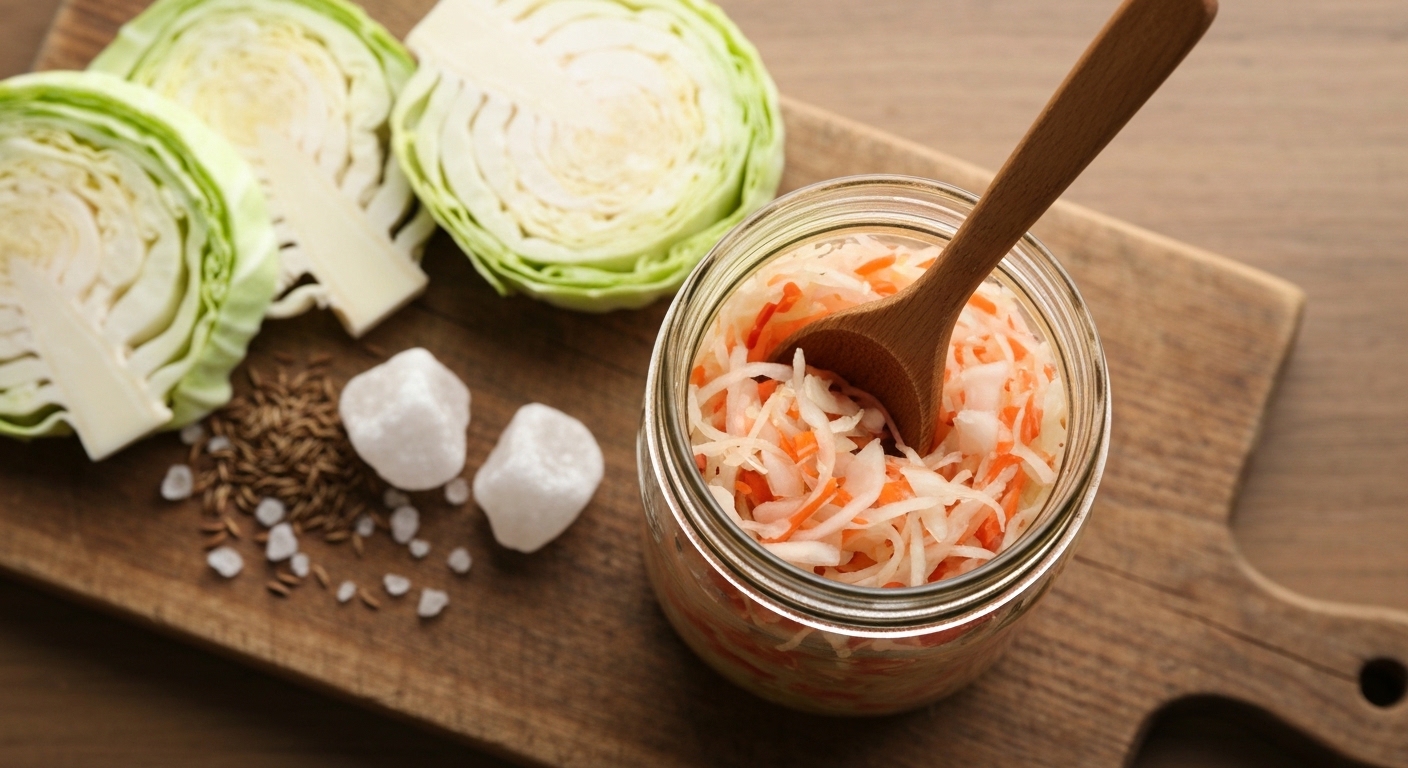
Sauerkraut is one of the oldest fermented foods in the world, and making it at home is absurdly simple. Two ingredients (cabbage and salt), one container, and a week of patience. That’s it.
The result is a probiotic-rich food that supports gut health, digestion, and immune function. Store-bought sauerkraut that’s been pasteurized has no live probiotics. The good stuff needs to be raw and unpasteurized, which means either buying from a specialty producer or making it yourself.
Making it yourself costs about $2 per jar and takes 15 minutes of active work.
What You Need
- 1 medium green cabbage (about 2 pounds / 900g)
- 1 tablespoon fine sea salt (not iodized; iodine can inhibit fermentation)
- A clean glass mason jar (1 quart / 1 liter)
- A smaller jar or weight that fits inside the mason jar
- A clean cloth or coffee filter and rubber band
That’s the entire equipment list. No fermentation crock, no airlock, no special tools.
The Process
Step 1: Prepare the Cabbage
Remove the outer leaves (save one for later). Cut the cabbage into quarters, remove the core, and slice thinly. You want shreds about the width of a nickel, but perfection doesn’t matter.
Step 2: Salt and Massage
Put the shredded cabbage in a large bowl. Sprinkle the salt over it. Now massage the cabbage with your hands, squeezing and kneading, for 5 to 10 minutes.
The salt draws water out of the cabbage through osmosis. After 5 to 10 minutes of massaging, you’ll have a pile of limp cabbage sitting in a pool of its own brine. This brine is your fermentation liquid. No need to add water.
Step 3: Pack the Jar
Stuff the salted cabbage into the mason jar, pressing down firmly with your fist or a wooden spoon. Push each handful down hard to eliminate air pockets. Pour any remaining brine from the bowl into the jar.
The cabbage should be completely submerged under the brine. This is critical. Cabbage above the brine line is exposed to air and will mold.
Step 4: Weight It Down
Place the saved outer cabbage leaf on top of the shredded cabbage, pressing it down to hold everything under the brine. Set the smaller jar (filled with water for weight) on top. This keeps the cabbage submerged.
Cover the whole setup with a cloth secured by a rubber band. This allows gases to escape while keeping dust and insects out.
Step 5: Ferment
Place the jar on a plate (brine may bubble over) in a spot out of direct sunlight, at room temperature (65 to 75 degrees Fahrenheit / 18 to 24 Celsius).
Days 1 to 3. You’ll see bubbles forming. This is good. It means the lactobacillus bacteria are doing their job, converting sugars into lactic acid.
Days 3 to 5. The brine turns cloudy. The cabbage starts tasting tangy. You can taste it daily to track progress.
Days 5 to 7. Sauerkraut is ready when it tastes pleasantly sour and tangy. The texture should be softened but still have some crunch.
Longer fermentation (2 to 4 weeks). Produces a more complex, tangier flavor. Experiment to find your preference.
Step 6: Store
Remove the weight and outer leaf. Cap the jar and refrigerate. Cold temperatures slow the fermentation dramatically. Homemade sauerkraut keeps in the refrigerator for 6 months or more.
Troubleshooting
White film on top. This is kahm yeast. It’s harmless but can affect flavor. Skim it off and make sure cabbage stays submerged.
It smells bad. Sauerkraut should smell sour, like vinegar. If it smells rotten or putrid, something went wrong (usually from not being submerged). Discard and start over.
It’s too salty. Use slightly less salt next time. You can also rinse finished sauerkraut before eating, though this washes away some probiotics.
It’s mushy. Over-fermented or fermented at too high a temperature. Try a shorter fermentation time or a cooler spot.
Why Fermented Foods Matter
Fermented foods like sauerkraut contain live lactobacillus bacteria that support gut health. The gut-skin connection is well-documented: a healthy gut microbiome reduces systemic inflammation, which shows up as clearer, calmer skin.
The lactic acid produced during fermentation also makes the nutrients in cabbage more bioavailable. Fermented cabbage contains higher levels of vitamin C, vitamin K, and B vitamins than raw cabbage.
A tablespoon or two of sauerkraut with meals is enough to provide probiotic benefits. No need to eat a whole jar.
Variations
Red cabbage sauerkraut. Same process, beautiful purple color. Slightly sweeter flavor.
Sauerkraut with caraway seeds. Add 1 teaspoon of caraway seeds in Step 2 for traditional German-style flavor.
Garlic sauerkraut. Add 3 to 4 minced garlic cloves in Step 2.
Spicy sauerkraut. Add red pepper flakes or fresh chili in Step 2.
Once you’re comfortable with basic sauerkraut, try our fermented beetroot kvass for another simple probiotic drink.
The beauty of home fermentation is its simplicity. Humans have been doing this for thousands of years without thermometers, pH strips, or special equipment. Trust the process, taste along the way, and you’ll have a jar of probiotic-rich sauerkraut that puts the store-bought version to shame.