How to Make Natural Fruit Soda (Healthy Fanta Alternative)
Make your own naturally fizzy fruit soda at home using real fruit, water kefir, or ginger bug. Zero refined sugar, real probiotics, and genuinely delicious.

Commercial sodas are sugar water with artificial flavoring. A can of Fanta Orange has 44 grams of sugar, zero nutritional value, and enough artificial colors to stain a shirt. Your body doesn’t need any of it.
But the craving for a cold, fizzy, fruit-flavored drink is legitimate. And it’s entirely possible to satisfy it with something that’s actually good for you: naturally fermented fruit soda that’s fizzy, sweet, probiotic-rich, and made from real fruit.
The process is simple. You make a fermented base (water kefir or ginger bug), add real fruit juice, and bottle it for a natural carbonation that rivals any commercial soda.
Method 1: Water Kefir Soda (Easiest)
Water kefir grains are colonies of beneficial bacteria and yeasts that ferment sugar water into a mildly tangy, slightly fizzy probiotic base. You can buy water kefir grains online for about $10. They last indefinitely with proper care.
First Ferment (The Base)
Ingredients:
- 3 to 4 tablespoons water kefir grains
- 1/4 cup organic cane sugar
- 4 cups filtered water (non-chlorinated)
Process:
- Dissolve sugar in the water
- Let it cool to room temperature
- Add water kefir grains
- Cover with cloth, rubber band
- Ferment at room temperature for 24 to 48 hours
The grains eat the sugar and produce lactic acid, a small amount of carbon dioxide, and beneficial bacteria. The longer you ferment, the less sweet and more tangy the result. Most of the sugar is consumed by the grains.
Second Ferment (The Soda)
- Strain out the kefir grains (save them for the next batch)
- Pour the fermented water kefir into flip-top glass bottles
- Add 2 to 3 tablespoons of fresh fruit juice per bottle (orange, grape, mango, berry, or any combination)
- Seal the bottles tightly
- Leave at room temperature for 12 to 24 hours
The sealed bottle traps the carbon dioxide produced during the second ferment, creating natural carbonation. After 12 to 24 hours, refrigerate to stop fermentation.
Important safety note. Pressure builds in sealed bottles. “Burp” the bottles every 12 hours by briefly opening the cap to release excess gas. Over-fermented bottles can explode.
Method 2: Ginger Bug Soda (No Special Ingredients)
A ginger bug is a wild fermentation starter made from ginger, sugar, and water. The natural yeasts and bacteria on fresh ginger root create a culture similar to a sourdough starter.
Making the Ginger Bug
Ingredients:
- 2 tablespoons fresh ginger, grated (with skin)
- 2 tablespoons sugar
- 2 cups filtered water
Process:
- Combine in a jar. Stir well. Cover with cloth.
- Each day for 5 to 7 days, add 1 tablespoon grated ginger and 1 tablespoon sugar. Stir.
- After 5 to 7 days, the mixture should be actively fizzy with visible bubbles. Your ginger bug is ready.
Making the Soda
Ingredients:
- 4 cups fruit juice (any fruit; use 100% juice or make your own)
- 1/4 cup strained ginger bug liquid
- Additional sugar if needed (1 to 2 tablespoons)
Process:
- Combine fruit juice and ginger bug liquid in a pitcher
- Pour into flip-top bottles, leaving 1 inch headspace
- Seal and leave at room temperature for 24 to 48 hours
- Refrigerate
Flavor Combinations
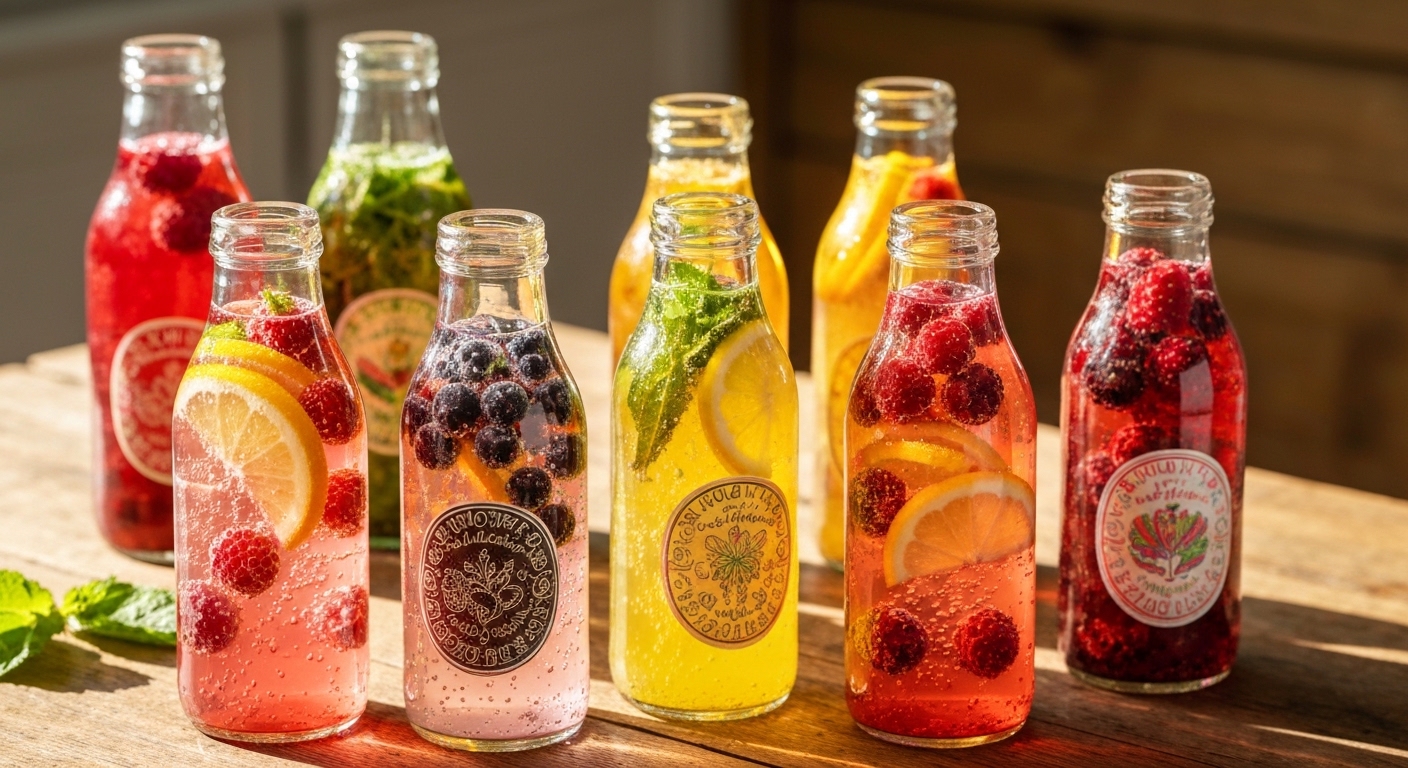
Orange cream. Orange juice + a splash of vanilla extract. Berry blast. Mixed berry juice (blueberry, raspberry, strawberry). Tropical. Mango + pineapple juice. Ginger lemon. Lemon juice + extra ginger + honey. Apple spice. Apple juice + cinnamon stick + a few cloves. Grape. Pure grape juice. Tastes remarkably close to grape soda.
Why This Is Better Than Store-Bought
Live probiotics. Like sauerkraut and kvass, naturally fermented soda contains beneficial bacteria that support gut health.
Dramatically less sugar. The fermentation process consumes most of the sugar. A finished water kefir soda has roughly 2 to 4 grams of sugar per serving compared to 40+ grams in commercial soda.
Real fruit. Actual fruit juice with real vitamins and antioxidants, not artificial flavoring designed to taste like fruit.
No artificial anything. No colors, preservatives, phosphoric acid, or high-fructose corn syrup.
Tips for Success
Temperature matters. Fermentation is faster in warmer temperatures and slower in cooler ones. In summer, check bottles more frequently. In winter, allow an extra day.
Use flip-top bottles. Standard caps don’t seal well enough for carbonation. Flip-top (Grolsch-style) glass bottles are ideal.
Start with short second ferments. 12 hours is safer than 48 hours when you’re learning. You can always ferment longer next time.
Keep it clean. Use clean jars and bottles. Soap residue can inhibit fermentation, so rinse thoroughly with hot water.
Sugar is fuel, not the end product. People worry about the sugar in fermented sodas. The sugar feeds the bacteria and yeasts. Most of it is consumed during fermentation. The finished product contains a fraction of the original sugar.
Making your own soda takes about 10 minutes of active work per batch. The rest is waiting. Once you have a water kefir culture or ginger bug going, you can produce a continuous supply of naturally fizzy, probiotic-rich soda that makes commercial soft drinks seem embarrassingly primitive.
Your fridge will never be without something cold and fizzy again. It’ll just be good for you this time.