Kiwi Benefits for Skin: What the SunGold Study Found
Can kiwi help your skin? What the 2025 SunGold kiwifruit study found (and didn't), plus easy vitamin C-rich foods to eat every day.

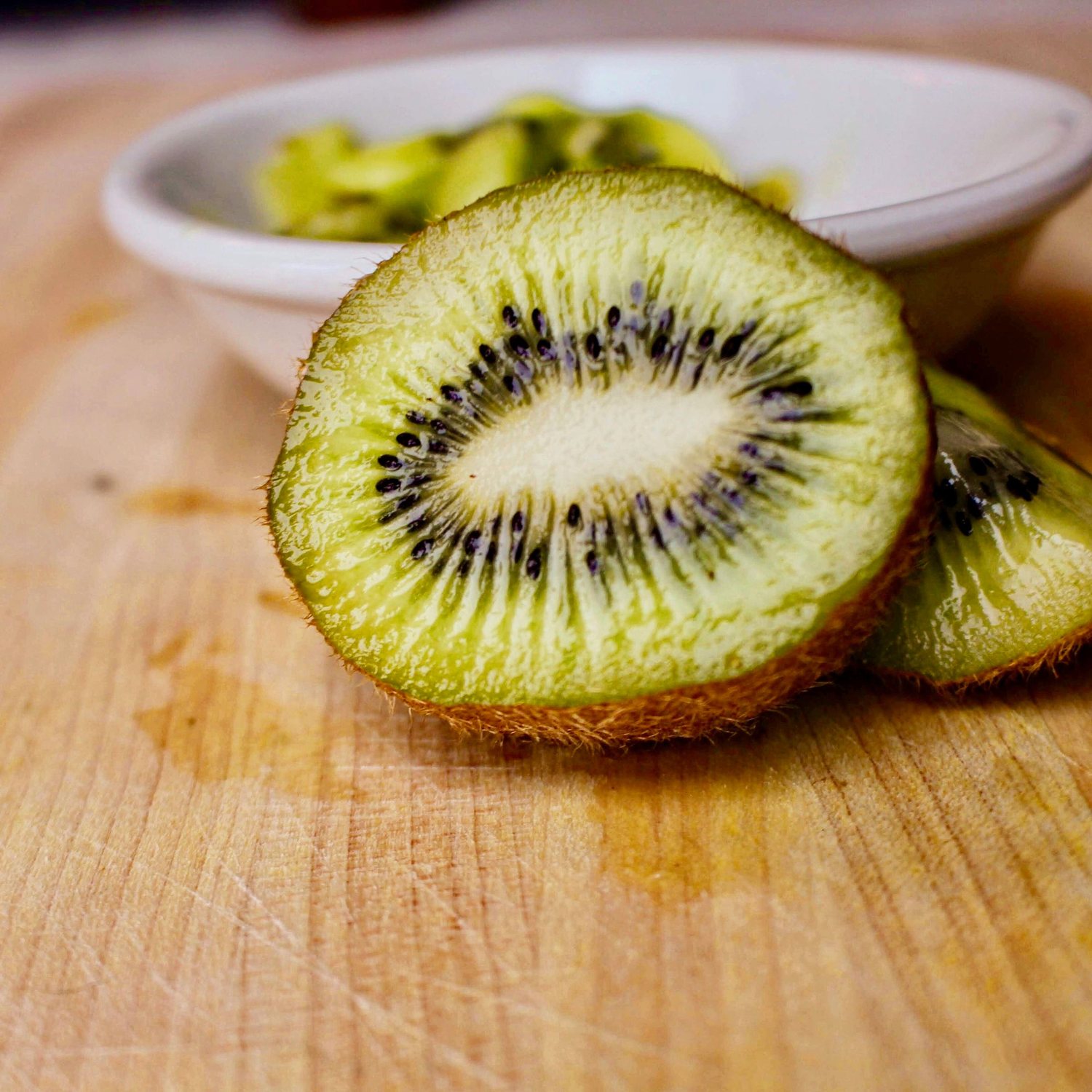
Photo: Jenna Hamra / Pexels. Contextual stock photograph, not a product test or endorsement. License.
This post contains affiliate links; we may earn a commission at no cost to you.
Code ROOTEDGLOW10 takes 10% off a one-time purchase at Mirai Skin. It cannot be combined with other product or order discounts.
Mirai Skin ships from South Korea. Contiguous US (48 states and Washington, DC): $9 for orders up to 1.3 kg, or free from $80 after discounts when the order is 1.3 kg or less. Heavier US orders cost more. EU: $11 flat per order, and that free-shipping threshold does not apply. Other countries: the rate is shown at checkout. Allow 3–5 business days to process, then usually 7–14 business days after dispatch. Duties or taxes may apply and are paid by the buyer.
Why Skin Needs Vitamin C
Vitamin C is a normal part of healthy skin. The Linus Pauling Institute (LPI) notes that vitamin C “is found at high levels in both the dermis and epidermis,” that it is an essential cofactor for collagen biosynthesis, and that oral vitamin C raises skin levels until plasma is saturated.
That does not mean more vitamin C always means better-looking skin. It means getting enough from food supports a process your skin already relies on. For a fuller look at collagen and food, see our guide to foods high in collagen.
The NHS says adults aged 19 to 64 need 40 mg of vitamin C a day, and that most people can get what they need from food. Kiwi makes that easy because one fruit often covers more than the daily amount.
The Two-Kiwis-a-Day Study: What Changed and What Didn’t
In 2025, Pullar and colleagues published a paper in the Journal of Investigative Dermatology: “Improved Human Skin Vitamin C Levels and Skin Function after Dietary Intake of Kiwifruit: A High-Vitamin-C Food” (DOI 10.1016/j.jid.2025.10.587). Zespri, a major kiwifruit marketer, funded the work. Keep that in mind when you read the headlines.
The design had two stages:
- Stage 1 was cross-sectional. The researchers measured skin and blood vitamin C in people having elective surgery.
- Stage 2 was a before-and-after pilot with no control group. Healthy adults with low baseline vitamin C ate two SunGold kiwifruit a day (about 250 mg of vitamin C) for 8 weeks. There were two sites, Christchurch and Hamburg, with 12 adults per site.
What changed. Skin vitamin C went up. In the per-protocol group (people whose blood vitamin C rose), ultrasound skin density rose from 0.154 to 0.228 scanner units. Epidermal cell proliferation, measured by Ki-67, rose from 21.06 to 27.42.
What did not change. Procollagen type I peptide, a direct marker of new collagen, did not change. There was no change in UVA protection. Elasticity fell slightly (about 7%).
The careful reading is rising skin density, which the authors link to collagen. The paper did not show that eating kiwi “boosts collagen.” The University of Otago press release used a stronger headline than the paper itself, so stick with the measured outcomes over the press wording.
Limits matter here. The pilot was small. There was no control group. People were recruited for low starting vitamin C, so results may not match someone who already eats plenty of fruit. Treat two kiwis a day as a simple food habit that raised skin vitamin C and skin density in this group, not as a fix for skin concerns.
How to Eat More Kiwi
Green kiwi and SunGold (gold) kiwi both supply vitamin C. The study used SunGold because it delivers a high vitamin C dose per fruit (about 250 mg from two fruit a day in the protocol). Green kiwi still counts as a strong everyday source. Either works if you like the taste and can stick with it.
Most people eat kiwi peeled. Some eat it with the skin on after washing; green skin is fuzzy, and SunGold skin is smoother. Choose whichever you’ll stick with.
Simple ways to add kiwi:
- Slice it onto yogurt or overnight oats.
- Dice it into a fruit salad with citrus or berries.
- Blend half a kiwi into a smoothie with banana and greens.
- Pack a whole kiwi as a snack (cut and scoop, or eat with the skin).
- Add wedges beside grilled fish or chicken for a sharp side.
For what is in season month by month, see our seasonal fruit guide. If kiwi feels pricey or hard to find, the vitamin C foods below cover the same nutrient from other produce.
Other Vitamin C-Rich Foods
Kiwi is convenient, but it is not the only option. The NHS and LPI both point to everyday produce that covers vitamin C without a supplement. Adults who eat fruit and vegetables regularly usually meet the NHS target of 40 mg a day.
| Food | Why it helps | Easy idea |
|---|---|---|
| Bell peppers | High vitamin C, especially raw | Slice into a salad or wrap |
| Citrus (oranges, grapefruit) | Classic everyday source | Eat a whole orange as a snack |
| Strawberries | Soft fruit, easy to share | Add to yogurt or porridge |
| Broccoli | Holds up in cooking | Steam lightly as a side |
| Guava | Very high vitamin C when available | Eat fresh if you find it |
| Blackcurrants | Listed by the NHS among top sources | Use frozen in smoothies |
| Brussels sprouts | NHS-listed vegetable source | Roast with olive oil |
| Potatoes | Modest but common source | Keep the skin on when you can |
A plate that mixes fruit and vegetables across the week does more than any single “superfood.” Our 10 anti-inflammatory meals and diet for glowing skin posts show how produce fits a normal week. The gut-skin connection is another reason to keep fiber-rich fruit in rotation.
If you take medicines, have kidney stones history, or have been told to limit certain fruits, ask a doctor or dietitian before making big changes.
Food First, Then the Outside
Eating vitamin C-rich food supports skin from the inside. Sun protection still does the heavy outdoor work. The American Academy of Dermatology recommends a broad-spectrum, water-resistant sunscreen with SPF 30 or higher on skin that clothing does not cover. Food does not replace SPF.
Topical vitamin C is a separate question from fruit. Our guide to a vitamin C serum morning routine covers how people layer it. Our sister site Glow Coded has a practical overview of dietary vs topical vitamin C for skin.
This post contains affiliate links; we may earn a commission at no cost to you.
If you already use a serum and want options in one place, Mirai Skin’s vitamin C serum collection is a starting point. Patch-test new products, and see a dermatologist if redness, itching or breakouts persist.
Bone broth and collagen-rich meals are popular pairings with vitamin C foods. We cover that angle in bone broth, collagen and skin elasticity and in the complete guide to ancestral eating. Keep the framing honest: food supports nutrition. It is not a procedure for skin.
Frequently Asked Questions
Is kiwi good for your skin?
Kiwi is rich in vitamin C, and vitamin C is a normal constituent of skin. A small 2025 pilot found higher skin vitamin C and higher ultrasound skin density after two SunGold kiwis a day for 8 weeks in adults with low starting levels. That supports kiwi as a useful food habit. It does not prove kiwi fixes skin concerns.
How many kiwis a day for skin?
The pilot used two SunGold kiwifruit a day for 8 weeks. That dose delivered about 250 mg of vitamin C. There is no official “kiwis for skin” target. One fruit a day still adds a lot of vitamin C for most people.
Is SunGold kiwi better than green kiwi for vitamin C?
The pilot used SunGold to deliver about 250 mg of vitamin C a day from two fruit. Green kiwi is also a strong vitamin C food. Choose the one you will actually eat.
Does eating kiwi increase collagen?
In the 2025 pilot, procollagen type I peptide (a direct marker of new collagen) did not change. Ultrasound skin density rose (skin density, which the authors link to collagen). Do not treat “eat kiwi, make more collagen” as a proven claim from this study.
What fruits have the most vitamin C?
Kiwi, strawberries, citrus and blackcurrants are reliable everyday choices. Guava is very high when you can find it. Peppers and broccoli also rank high among common produce, per NHS and LPI sources.
Can I eat kiwi skin?
Many people peel kiwi. Some eat washed skin; green is fuzzy and SunGold is smoother. Either is a preference, not a requirement.
Sources
- Pullar JM et al. Improved Human Skin Vitamin C Levels and Skin Function after Dietary Intake of Kiwifruit: A High-Vitamin-C Food. Journal of Investigative Dermatology (online 28 Oct 2025). DOI 10.1016/j.jid.2025.10.587. https://www.jidonline.org/article/S0022-202X(25)03509-2/fulltext
- University of Otago newsroom. Vitamin C from food boosts collagen levels in skin - landmark study. https://www.otago.ac.nz/news/newsroom/vitamin-c-from-food-boosts-collagen-levels-in-skin-landmark-study
- Linus Pauling Institute, Oregon State University. Vitamin C and Skin Health. https://lpi.oregonstate.edu/mic/health-disease/skin-health/vitamin-C
- NHS. Vitamin C. https://www.nhs.uk/conditions/vitamins-and-minerals/vitamin-c/
- American Academy of Dermatology. Sunscreen FAQs. https://www.aad.org/media/stats-sunscreen