Foods High in Collagen: A Whole-Food List
Which foods are high in collagen? Skin-on fish, bone broth, chicken and gelatin, plus the vitamin C and protein foods your body uses to make its own collagen.

This post contains affiliate links; we may earn a commission at no cost to you.
Code ROOTEDGLOW10 takes 10% off at Mirai Skin (one code per order).
Mirai Skin ships from South Korea: $11 flat to the EU, other rates at checkout; usually 7–14 business days after a 3–5 day dispatch. Import duties, if any, are paid by the buyer.
Quick Answer
Collagen comes from animal connective tissue, so the foods highest in it are tough, slow-cooked cuts of meat, fish bones and skin, bone broth and gelatin. Your body also makes its own collagen from the protein you eat, and it needs vitamin C to do that. Pair collagen foods with citrus, peppers or berries.
What Collagen Is, and Why Eating It Isn’t the Same as Adding It to Skin
Collagen is “the most abundant protein in the body,” according to the Harvard T.H. Chan School of Public Health’s Nutrition Source. It’s the fiber-like protein that makes up connective tissue, and it’s a major part of bone, skin, muscles, tendons and cartilage.
When you eat collagen, your stomach breaks it down into amino acids, and those “are then distributed wherever the body most needs protein,” Harvard explains. Eating collagen doesn’t send it straight to your skin. Harvard also notes “a lack of research to show that eating collagen can directly benefit skin or joint health.”
That doesn’t make collagen-rich foods pointless. They’re nourishing, traditional foods, and they supply the amino acids your body uses to build protein, including its own collagen. The realistic framing is “good food that supports overall nutrition,” not “collagen in, collagen on your face.”
Harvard lists the things that make collagen production drop fastest: excess sun exposure, smoking, excess alcohol, and lack of sleep and exercise. Food is one part of a bigger picture.
Collagen-Rich Foods: The List
In food, Harvard says, collagen “is naturally found only in animal flesh like meat and fish that contain connective tissue.” These are the main places to find it.
| Food | Where the collagen is | A simple way to eat it |
|---|---|---|
| Tough cuts of meat | Connective tissue in pot roast, brisket and chuck | Braise or slow-cook until tender |
| Fish | Bones and skin of fresh and saltwater fish | Cook fillets skin-on, or eat canned fish with soft bones |
| Bone broth | Collagen released from simmered bones | Sip it, or use it as a soup and stew base |
| Gelatin | Made from boiled bones, cartilage and skin | Set broths, homemade gummies, panna cotta |
| Chicken with skin and joints | Skin and cartilage | Roast with the skin on, and simmer the bones for broth |
Bone Broth
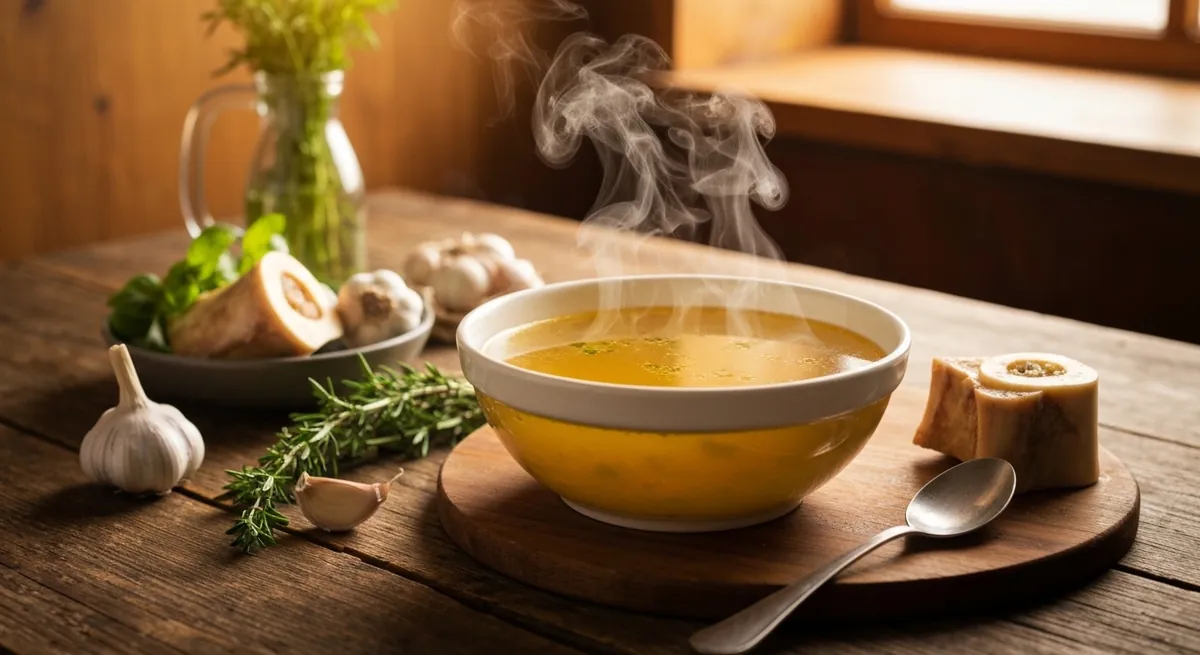
Bone broth is made by simmering animal bones in water with a little vinegar for anywhere from 4 to 24 hours, per Harvard. The vinegar helps release collagen and minerals from the bones. Harvard adds that the amount of amino acids “will vary among batches depending on the types of bones used, how long they are cooked, and the amount of processing.”
We have a full bone broth recipe guide, a look at what research says about bone broth, collagen and skin, and a piece on bone broth and gut health.
Gelatin
Gelatin is the cooked form of collagen. Harvard describes it as the product of boiling animal bones, cartilage and skin for several hours, then letting the liquid cool and set. If your homemade broth turns jelly-like in the fridge, that’s gelatin.
Fish
Harvard notes that collagen “is also found in the bones and skin of fresh and saltwater fish.” Cooking fillets skin-on and eating canned fish with soft bones are easy ways to get it. Oily fish also brings omega-3 fats; see our guide to omega-3 for skin.
Slow-Cooked Cuts and Organ Meats
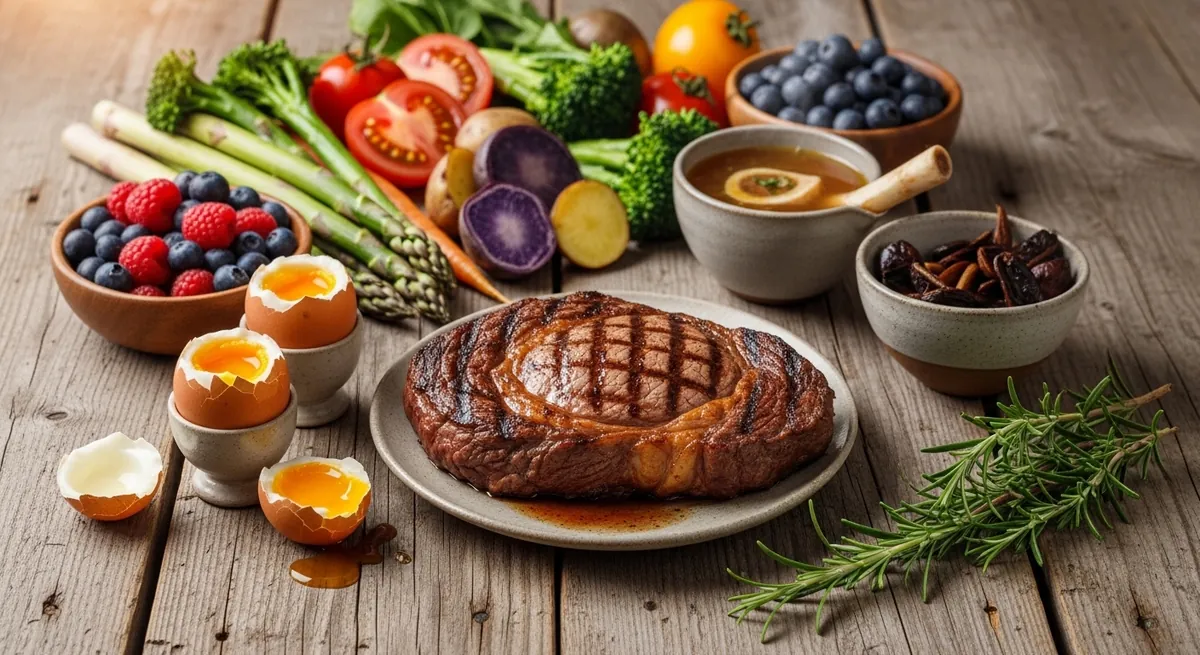
Tough cuts such as pot roast, brisket and chuck are full of connective tissue, and long, slow cooking turns it tender. Harvard adds a caution: “a high intake of red meat is not recommended as part of a long-term healthy and environmentally sustainable diet.” So treat these as occasional dishes rather than a daily habit.
If you’re curious about nose-to-tail cooking, our organ meats 101 guide is a good place to start, and the complete guide to ancestral eating shows how these foods fit into a balanced week.
Foods That Help Your Body Make Collagen
Your body builds its own collagen. These are the nutrients involved.
Vitamin C
The body can’t make vitamin C, and it’s needed to make collagen. The Linus Pauling Institute describes vitamin C as “an essential cofactor” in several processes, including “the biosynthesis of collagen.”
The NHS vitamin C page lists good sources as citrus fruit such as oranges, peppers, strawberries, blackcurrants, broccoli, brussels sprouts and potatoes. It says adults aged 19 to 64 need 40 mg of vitamin C a day, and that most people can get all they need from their diet. For what’s in season month by month, see our seasonal fruit guide.
Protein
Collagen is a protein, and Harvard notes that several high-protein foods contain the amino acids that make collagen: glycine, proline and hydroxyproline. These include fish, poultry, meat, eggs, dairy, legumes and soy. Getting protein at each meal covers this.
Zinc and Copper
Harvard says collagen production also requires nutrients like zinc. The NIH Office of Dietary Supplements (ODS) zinc fact sheet lists oysters, meat, fish, poultry and other seafood as good sources, and says beans, nuts, whole grains, eggs and dairy provide some.
Copper matters too. The ODS copper fact sheet says your body uses copper to make connective tissues, and lists beef liver, oysters and other shellfish, nuts, seeds, whole grains, potatoes, mushrooms, avocados, chickpeas and tofu as food sources. ODS adds that most people get enough copper from food, and that high doses of zinc supplements can interfere with copper absorption. That’s one reason to talk to a doctor before taking mineral supplements.
Putting It on the Plate: Simple Pairings
The easiest habit is to pair a collagen-rich food with a vitamin C food at the same meal. A few ideas:
- Braised beef with peppers and tomatoes. A slow-cooked chuck or brisket stew gets its vitamin C from the vegetables in the pot. Harvard lists bell peppers and tomatoes among vitamin C sources.
- Bone broth soup with greens and broccoli. Add the vegetables at the end so they stay bright. The NHS lists broccoli and brussels sprouts as good vitamin C sources.
- Skin-on salmon or sardines with a squeeze of citrus. Serve with a side salad of leafy greens.
- Roast chicken with potatoes. Keep the skin on, and save the carcass for the next batch of broth. The NHS lists potatoes among its vitamin C sources.
- Homemade gelatin dessert with berries. Set it with strawberries or blackcurrants.
Cooking at home also lets you choose the bones and the simmer time, which Harvard says shape how much the broth contains. Our bone broth recipe guide covers simmer times and which bones to use.
Plant-Based Eaters: There’s No Plant Collagen
Collagen is found only in animal foods, so there’s no plant source of it. Plant-based eaters can still cover the building blocks. Harvard lists legumes and soy among the protein foods with collagen’s amino acids, and fruit and vegetables supply vitamin C. Beans, nuts and whole grains add some zinc, and nuts, seeds, whole grains, chickpeas and tofu add copper, per ODS.
Collagen Foods vs Collagen Supplements
Harvard reports that some randomized controlled trials have found collagen supplements improve skin elasticity, but it also flags a problem. Most of this research is “funded or partially funded by related industries,” which makes it hard to judge how well supplements work. In the US, the FDA doesn’t review supplements for safety or effectiveness before they’re sold, Harvard adds.
We compare the two approaches in collagen peptides vs bone broth. If you’re thinking about a supplement, check with a doctor or pharmacist first, especially if you take medicines or are pregnant.
Supporting Skin From the Outside: Daily SPF
Food supports the body’s own collagen production. Sun protection supports skin from the outside. Harvard lists excess sun exposure first among the things that make collagen production drop fastest, and its list of habits that may help protect your body’s natural collagen starts with wearing sunscreen or limiting time in direct sunlight. The same list includes getting 7 to 9 hours of sleep, avoiding smoking and secondhand smoke, and managing stress. The American Academy of Dermatology says UVA rays “can prematurely age your skin, causing wrinkles and age spots,” and recommends a broad-spectrum, water-resistant sunscreen with SPF 30 or higher every day on skin that clothing doesn’t cover.
This post contains affiliate links; we may earn a commission at no cost to you.
Mirai Skin has a large Korean sunscreen collection if you’re looking for a daily SPF. For a closer look at how peptides are used in skincare, our sister site Glow Coded has a complete guide to peptides in K-beauty. For the wider plate, see our diet for glowing skin.
Frequently Asked Questions
What foods are highest in collagen?
Tough, slow-cooked cuts of meat, fish bones and skin, bone broth, gelatin, and chicken skin and joints. Collagen is only found in animal foods with connective tissue.
Do collagen-rich foods help your skin?
Your body breaks dietary collagen down into amino acids and uses them wherever it needs protein. Harvard notes there’s a lack of research showing that eating collagen directly benefits skin, so think of these foods as part of good overall nutrition.
Which fruits help collagen production?
Fruits high in vitamin C, such as oranges, strawberries and blackcurrants, because your body needs vitamin C to make collagen. Peppers, broccoli and brussels sprouts are good vegetable sources, per the NHS.
Is there vegan collagen?
No plant food contains collagen. Vegans can focus on protein from legumes and soy, plus vitamin C from fruit and vegetables.
Is bone broth high in collagen?
Bone broth made from bones and joints contains collagen and gelatin, but Harvard notes the amount varies with the bones used, the cooking time and processing.
Sources
- Harvard T.H. Chan School of Public Health, The Nutrition Source. Collagen. https://nutritionsource.hsph.harvard.edu/collagen/
- Linus Pauling Institute, Oregon State University. Vitamin C. https://lpi.oregonstate.edu/mic/vitamins/vitamin-C
- NHS. Vitamin C. https://www.nhs.uk/conditions/vitamins-and-minerals/vitamin-c/
- NIH Office of Dietary Supplements. Zinc, Fact Sheet for Consumers. https://ods.od.nih.gov/factsheets/Zinc-Consumer/
- NIH Office of Dietary Supplements. Copper, Fact Sheet for Consumers. https://ods.od.nih.gov/factsheets/Copper-Consumer/
- American Academy of Dermatology. Sunscreen FAQs. https://www.aad.org/media/stats-sunscreen