7 Evening Wind-Down Rituals for Deep Sleep
Struggling to fall asleep or stay asleep? These 7 science-backed evening rituals prepare your body and brain for deep, restorative sleep. Start tonight.


Sleep isn’t a switch you flip. It’s a process your body needs to gradually enter. The transition from wakefulness to sleep requires your nervous system to shift from sympathetic (fight-or-flight) to parasympathetic (rest-and-digest) dominance. This doesn’t happen instantly, especially if your evening is spent in front of screens, processing stressful information, or in bright lighting.
The wind-down period before bed is when sleep quality is actually determined. What you do in the last 60-90 minutes before lying down has more impact on sleep quality than any supplement, mattress, or sleep tracking device.
These 7 rituals aren’t random wellness suggestions. Each one triggers specific physiological responses that prepare your body for deep, restorative sleep.
Why You Can’t Just “Fall Asleep”
Your body needs several things to happen before sleep onset:
Core temperature must drop. Your brain initiates sleep when core body temperature decreases by about 1-2°F. This is why you sleep better in a cool room and why a hot bath before bed (counterintuitively) helps — the subsequent cooling triggers drowsiness.
Melatonin must rise. Melatonin production begins when your brain detects decreasing light levels. Bright lights and screens in the evening suppress this signal, delaying sleep onset.
Cortisol must fall. Cortisol naturally decreases in the evening, but stress, screens, and stimulating activities keep it elevated, preventing the relaxation necessary for sleep.
The nervous system must shift. From sympathetic activation (alert, responsive, engaged) to parasympathetic dominance (calm, relaxed, receptive).
Each ritual below addresses one or more of these requirements.
The 7 Rituals
1. Temperature Drop Protocol (90 minutes before bed)
Take a warm bath or shower — not hot, just comfortably warm (40°C/104°F). Stay in for 10-15 minutes.
Why it works: This sounds backward, but warming your body’s surface dilates blood vessels in the skin. When you exit the warm water, heat dissipates rapidly through those dilated vessels, causing your core temperature to drop. This drop triggers the thermal signal that tells your brain it’s time to sleep.
A 2019 meta-analysis in Sleep Medicine Reviews analyzed 5,322 studies and found that bathing 1-2 hours before bed at 40-43°C significantly improved both sleep onset latency (time to fall asleep) and sleep quality.
2. Light Dimming (60-90 minutes before bed)
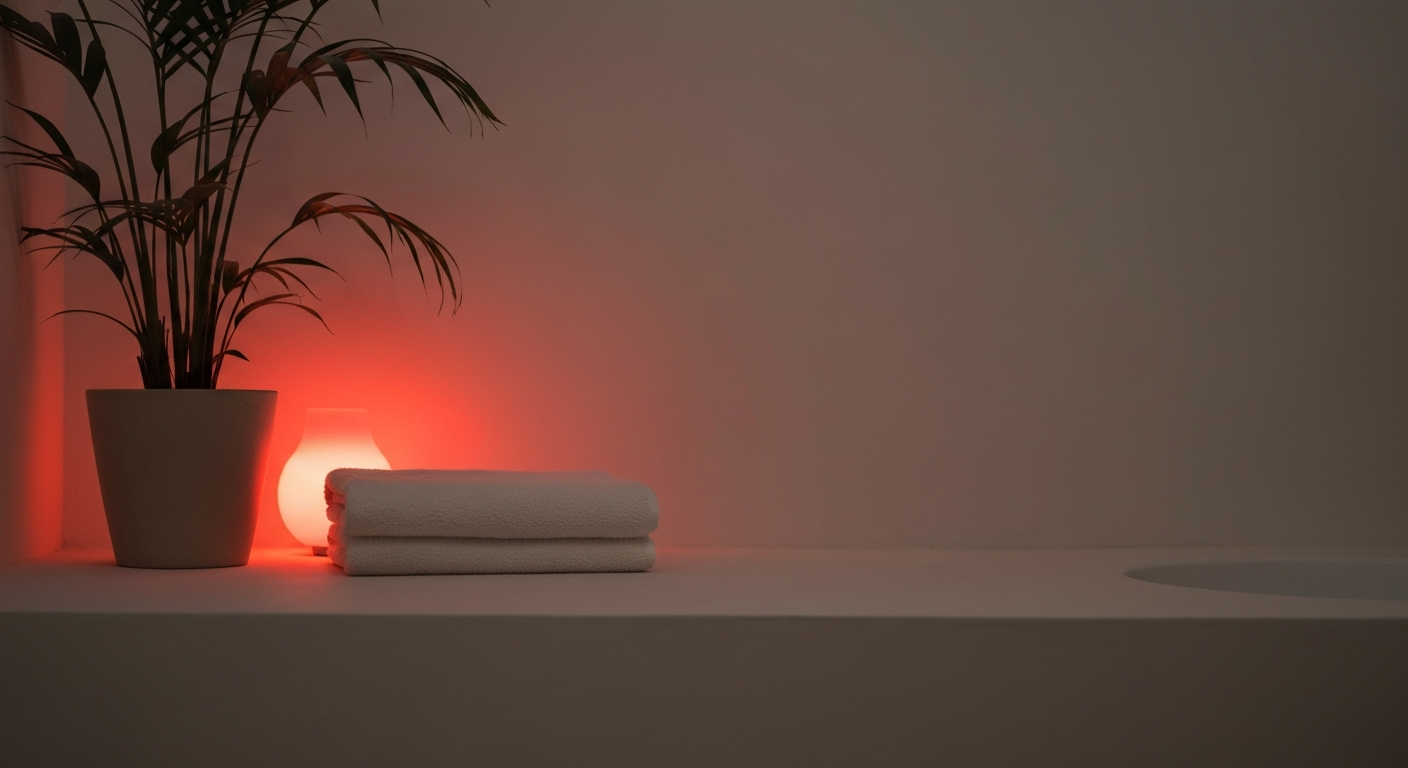
Switch to warm, dim lighting. Turn off overhead lights. Use lamps with warm-toned bulbs (2700K or lower). If you must use screens, activate night mode and reduce brightness to minimum.
Why it works: Bright light, especially blue-spectrum light from screens and LED bulbs, suppresses melatonin production by signaling to the suprachiasmatic nucleus (your brain’s master clock) that it’s still daytime. Even moderate room lighting in the evening can suppress melatonin by 50%.
Dimming lights 60-90 minutes before bed allows melatonin to rise naturally, creating the drowsiness that leads to smooth sleep onset. Some people use blue-light-blocking glasses for an added buffer.
3. Brain Dump Journaling (30-60 minutes before bed)
Take 5 minutes to write down everything that’s on your mind. Worries, tomorrow’s tasks, unfinished business, random thoughts — get them all out of your head and onto paper.
Why it works: One of the most common reasons people can’t fall asleep is rumination — the mind cycling through concerns and to-do lists. Research from Journal of Experimental Psychology found that writing a specific to-do list for the next day helped participants fall asleep significantly faster than writing about completed tasks.
The mechanism is cognitive offloading. Once a concern is written down, your brain registers it as “captured” and stops cycling through it. It’s remarkably effective for quieting the mind.
4. Herbal Tea Ritual (45-60 minutes before bed)
Brew a cup of caffeine-free herbal tea. Chamomile, valerian root, passionflower, or lavender are the most studied for sleep benefits. Drink it slowly.
Why it works: The herbal compounds have mild sedative effects — chamomile binds to benzodiazepine receptors in the brain, promoting relaxation. Valerian root increases GABA availability. But the ritual itself matters as much as the herbs. The warm liquid, the slow sipping, the sensory experience — all of it signals to your nervous system that the day is winding down.
A 2017 study in Molecular Medicine Reports found that chamomile extract significantly improved sleep quality in elderly participants.
5. Gentle Stretching or Yoga Nidra (20-30 minutes before bed)
Spend 10-15 minutes doing gentle stretches. Focus on areas that hold tension: neck, shoulders, hips, lower back. Hold each stretch for 30-60 seconds. Breathe slowly through each position.
Alternatively, practice Yoga Nidra (“yogic sleep”) — a guided meditation done lying down that systematically relaxes each part of the body. It’s available through many free apps and YouTube channels.
Why it works: Gentle stretching activates the parasympathetic nervous system through the stretch reflex and deep breathing. Yoga Nidra has been shown to reduce cortisol and increase delta brain wave activity — the same brain waves present during deep sleep.
A 2020 study found that participants who did gentle yoga before bed fell asleep faster, slept longer, and reported better sleep quality than the control group.
6. Breathing Exercise: 4-7-8 Method (in bed)
Once you’re in bed, lights off:
- Inhale through your nose for 4 counts
- Hold for 7 counts
- Exhale slowly through your mouth for 8 counts
- Repeat 4 cycles
Why it works: The extended exhale (twice as long as the inhale) directly stimulates the vagus nerve, which activates the parasympathetic nervous system. The breath hold forces CO2 to build slightly, which paradoxically calms the brain. The counting occupies the conscious mind, preventing rumination.
Dr. Andrew Weil developed this technique and describes it as a “natural tranquilizer for the nervous system.” Practiced consistently, it can become a conditioned sleep trigger — your body learns that this breathing pattern means sleep.
7. Room Optimization (set and forget)
Set your bedroom for sleep success:
- Temperature: 18-19°C (65-67°F). Your body needs cool air to facilitate the core temperature drop.
- Darkness: Complete darkness or as close to it as possible. Use blackout curtains or a sleep mask.
- Quiet: White noise, earplugs, or simply a quiet room. Consistent ambient sound is better than silence punctuated by random noise.
- No screens in the bedroom. Phone charges in another room. If you use a phone alarm, switch to a simple alarm clock.
Why it works: Environmental factors affect every stage of sleep. Temperature affects deep sleep quality (cooler = more deep sleep). Light affects REM sleep and melatonin maintenance through the night. Noise fragmentation reduces total sleep duration even when you don’t consciously wake.
These are one-time setups. Once your room is optimized, the benefit is automatic every night.
The 90-Minute Wind-Down Timeline
T-90 min: Warm bath/shower. Switch to dim lighting. T-60 min: Herbal tea. Brain dump journaling. T-30 min: Gentle stretching or Yoga Nidra. No screens. T-0 (in bed): 4-7-8 breathing, 4 cycles. Sleep.
You don’t need to do all 7 rituals every night. Start with the ones that address your specific barrier to sleep. Can’t stop thinking? Start with the brain dump. Can’t relax physically? Start with the bath and stretching. Build from there.
Consistency matters more than perfection. A imperfect routine done every night beats a perfect routine done occasionally.
For the relationship between sleep and the stress response, see our guide on how to fix your sleep in 7 days and the connection between meditation, cortisol, and skin health.
Related reading: K-Beauty Night Routine for Glowing Skin
Related reading: Meditation for Beginners: Start With 5 Minutes a Day
Related reading: The Sleep-Stress-Skin Wellness Triangle