Meditation for Beginners: Start With Just 5 Minutes
A practical, no-nonsense guide to starting a meditation practice. No spirituality required. Just 5 minutes, a quiet spot, and your breath.

Meditation has a branding problem. It’s been packaged as something mystical, spiritual, and complicated. Incense, chanting, lotus positions, enlightenment. This puts off practical people who just want to feel less stressed and think more clearly.
Here’s what meditation actually is: sitting still, paying attention to your breath, and noticing when your mind wanders. That’s it. The entire practice in one sentence.
The benefits are not spiritual. They’re biological. Meditation measurably reduces cortisol, lowers blood pressure, improves focus, reduces anxiety, and changes brain structure in ways that support emotional regulation. These benefits start appearing within weeks of consistent practice.
Why 5 Minutes
Every meditation guide tells you to start with 20 minutes. This is terrible advice for beginners. Twenty minutes of sitting still with your thoughts feels like an eternity when you’ve never done it. You’ll hate it, skip tomorrow, and quit by day three.
Five minutes is the minimum effective dose that produces benefits without being miserable. It’s short enough to fit anywhere and tolerable enough to actually do consistently.
Once 5 minutes feels easy (usually after 2 to 3 weeks), you’ll naturally want to extend. That’s the right way to build: desire-driven, not discipline-forced.
How to Meditate (The Actual Steps)
1. Choose a spot
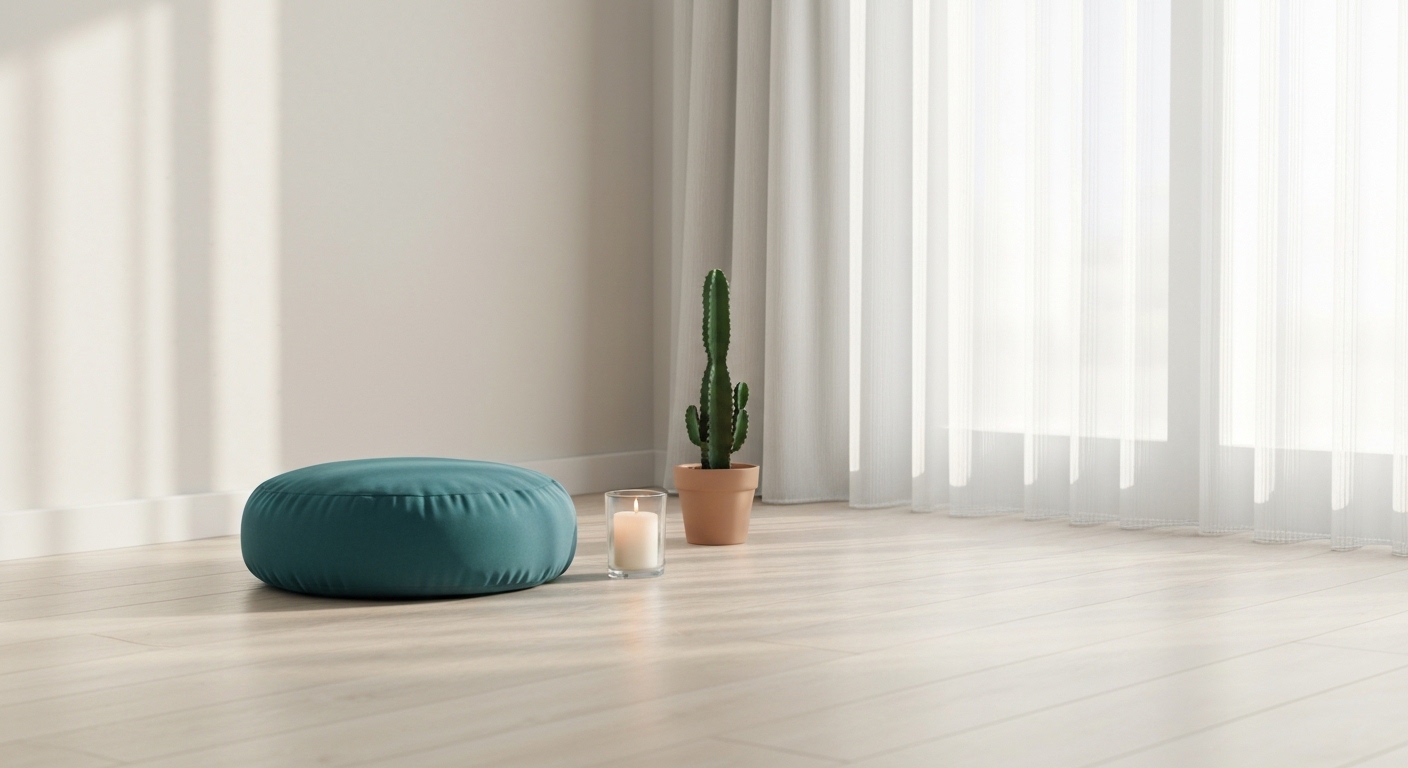
Quiet room, parked car, park bench, anywhere you won’t be interrupted for 5 minutes. You don’t need a meditation cushion or a special room.
2. Set a timer
5 minutes. Use your phone timer with a gentle alarm tone. Put the phone face-down so you’re not tempted to check it.
3. Sit comfortably
Chair, floor, couch, doesn’t matter. Back relatively straight (not rigid), hands wherever they’re comfortable. Close your eyes or soften your gaze toward the floor.
4. Breathe normally
Don’t try to control your breath. Just notice it. The sensation of air entering your nostrils. Your chest or belly expanding. The exhale leaving your body.
5. When your mind wanders (it will)
This is the most important part. Your mind will wander within seconds. You’ll start thinking about work, dinner, that conversation yesterday, what you need to buy at the store. This is completely normal.
When you notice you’ve wandered, gently bring your attention back to your breath. No frustration, no judgment. The wandering is not failure. The noticing and returning is the practice. Every time you redirect your attention, you’re strengthening the neural pathway for focus.
6. Timer goes off
Open your eyes. You’re done.
What You’ll Experience
Day 1 to 3. This is weird. Your mind races. You wonder if you’re doing it right. You probably checked the timer three times.
Day 4 to 7. You notice brief moments of actual stillness between thoughts. They might last 2 seconds. This is progress.
Week 2. Sitting still feels less uncomfortable. You might notice you’re slightly calmer during the day.
Week 3 to 4. Five minutes starts feeling too short. You naturally extend to 7 or 10 minutes. The difference in your baseline stress level becomes noticeable to you and possibly to people around you.
Month 2+. The practice becomes part of your day. Missing it feels wrong. Your response to stressful situations noticeably slows down. You react less and respond more.
The Science (Brief Version)
Cortisol reduction. Regular meditation reduces cortisol levels (the stress hormone). A 2023 meta-analysis of 45 studies confirmed significant cortisol reduction in meditators versus non-meditators. Lower cortisol means better sleep, less anxiety, and healthier skin. For more on this connection, see our guide on meditation and cortisol.
Gray matter changes. Harvard researchers found that 8 weeks of meditation increased gray matter density in the hippocampus (learning and memory) and decreased it in the amygdala (fear and anxiety). Eight weeks.
Default mode network. Meditation quiets the default mode network (the brain regions active during mind-wandering and self-referential thought). This is the “mental chatter” that causes rumination, worry, and overthinking. Less DMN activity means a quieter, calmer mind.
Blood pressure. The American Heart Association recognizes meditation as a supplementary practice for managing hypertension. Regular meditation has been shown to reduce systolic blood pressure by 5 to 10 mmHg.
Common Questions
Do I need to clear my mind? No. The goal isn’t an empty mind. The goal is noticing when your mind wanders and gently redirecting attention. A completely clear mind is rare and unnecessary.
When should I meditate? Morning is ideal because it sets the tone for the day and is easiest to make consistent. But any time works. Some people prefer before bed for better sleep.
Does it matter how I sit? No. Sit however you’re comfortable. The lotus position is tradition, not requirement.
What about guided meditation apps? They’re fine for starting. Headspace and Calm are well-made. But don’t become dependent on them. The eventual goal is sitting in silence with your own attention.
I fell asleep during meditation. Is that bad? It means you’re tired, not that you failed. Try meditating earlier in the day or sitting upright instead of lying down.
The Two-Week Challenge
Commit to 5 minutes of meditation every day for 14 days. Same time, same spot. No exceptions.
After 14 days, evaluate. Not whether you feel “enlightened.” Whether your baseline stress level has shifted. Whether you’re sleeping better. Whether you’re slightly less reactive.
If the answer is yes to any of those, you have your data. Continue. If not, you lost 70 minutes total. That’s less time than you spent scrolling your phone yesterday.
Five minutes. Your breath. Fourteen days. That’s all it takes to know if this works for you.
Ready to go deeper? Once basic breath awareness feels comfortable, try our 10-minute body scan meditation — a structured next step that’s especially useful for tension, sleep problems, and reconnecting with physical sensation.
Explore the Meditation Collection
- 7 Meditation Techniques Compared: Which Style Fits You — once breath awareness clicks, try other techniques to find what resonates
- 15-Minute Morning Meditation Sequence — a structured progression from breath to visualization for when 5 minutes feels too short
- 10-Minute Body Scan Meditation for Beginners — systematic tension release from head to toe
- Meditation, Cortisol, and Skin Health — the science behind why consistent practice visibly changes your skin