Beneficios del cepillado en seco: ¿Realidad o puro cuento del sistema linfático?
Analizamos el cepillado en seco: qué hace realmente por la textura y circulación de tu piel, por qué las promesas de 'desintoxicar' el sistema linfático y reducir la celulitis son exageradas, y cómo hacerlo sin irritar tu piel.

Dry brushing has surged in popularity over recent years, lauded by wellness influencers and beauty gurus alike as a panacea for everything from dull skin to stubborn cellulite and even internal detoxification. The image of a glowing, radiant complexion achieved through a simple, daily ritual is undeniably appealing. But as with many natural health trends, it’s crucial to separate the genuine, evidence-backed benefits from the marketing hype. At Rooted Glow, we believe in empowering you with accurate information so you can make informed choices for your well-being. Let’s delve into the reality of dry brushing, examining what it is, what it can truly do for your skin, and where its claims fall short.
What dry brushing is
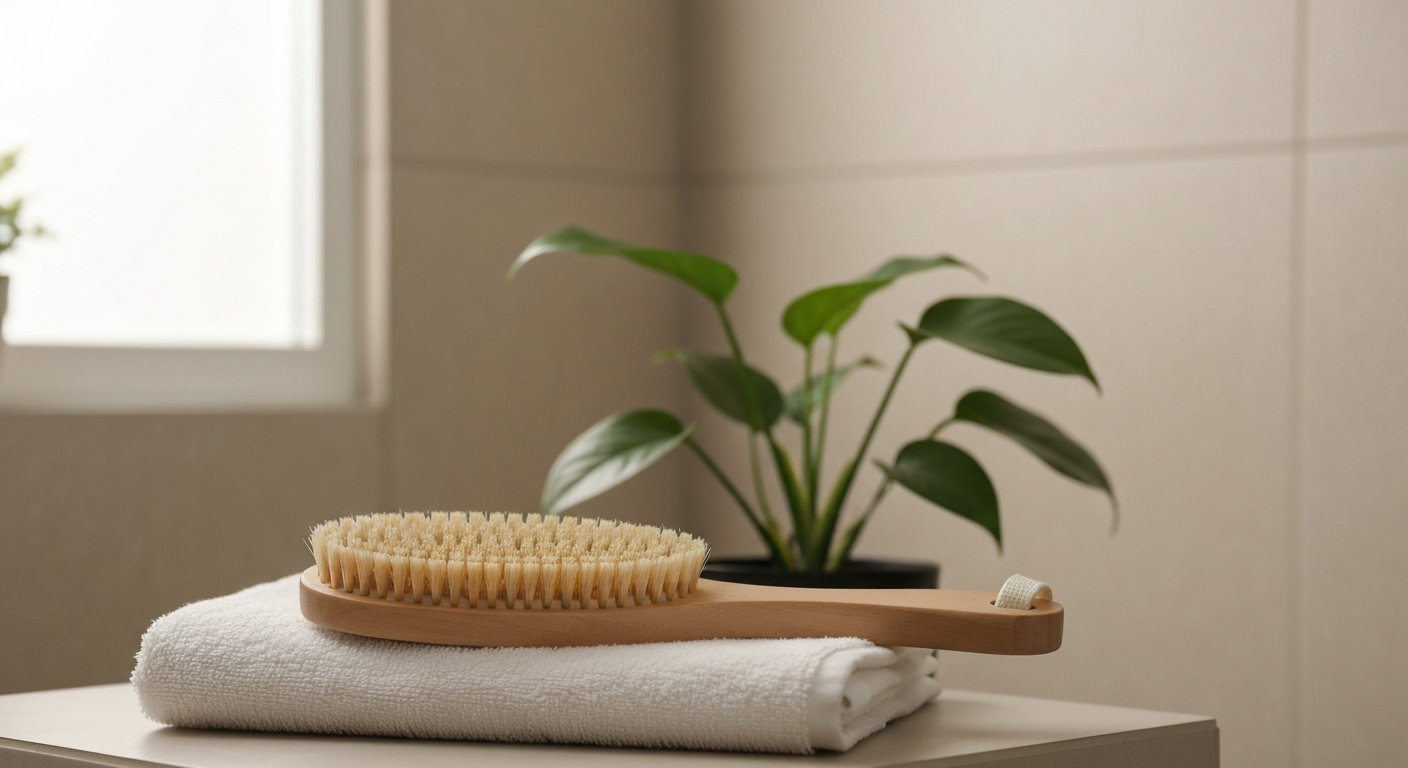
At its core, dry brushing is a simple, ancient practice involving the use of a stiff-bristled brush, typically made from natural fibers, to gently massage and exfoliate the skin while it’s dry. The brushes often feature a long handle to reach all areas of the body, and the bristles themselves are firm but not overly harsh.
The technique itself is straightforward: you brush your skin in specific patterns, usually in long, sweeping strokes directed towards your heart. This physical action serves as a form of mechanical exfoliation, similar to how a scrub or a loofah works, but performed on dry skin before showering.
While it feels like a modern trend, dry brushing has roots in various traditional health practices, including Ayurveda, where it’s known as “Garshana” and is used to stimulate circulation and promote skin health. The idea is that stimulating the skin’s surface can have broader benefits for the body, a concept that we’ll explore in detail as we dissect its claimed advantages.
The benefits that are actually real
When we strip away the grander, unproven claims, dry brushing offers several tangible benefits that contribute to healthier, more radiant skin and a sense of well-being. These are the aspects where the science, or at least common dermatological understanding, aligns with the experience.
Superior Exfoliation for Smoother Skin
This is, without a doubt, the primary and most well-supported benefit of dry brushing. Our skin is constantly shedding dead cells, a process called desquamation. Sometimes, these dead cells don’t shed as efficiently as they could, leading to a dull, rough, or flaky appearance.
Dry brushing provides an excellent form of physical exfoliation. The firm bristles gently yet effectively slough away these dead skin cells from the surface of your epidermis. Think of it as a natural, manual resurfacing treatment. Regular exfoliation helps to:
- Improve skin texture: By removing the rough, flaky layer of dead cells, dry brushing reveals the fresh, smoother skin underneath. Your skin will feel noticeably softer to the touch almost immediately after your first session.
- Enhance skin radiance: Dead skin cells can make your complexion appear dull and lackluster. By removing them, dry brushing allows your skin’s natural glow to shine through.
- Promote cell turnover: While not a deep cellular change, stimulating the skin’s surface encourages the natural process of cell renewal, leading to healthier-looking skin over time.
- Prepare skin for moisturization: With the barrier of dead skin cells removed, your skin is better able to absorb moisturizers, oils, and lotions, making them more effective.
The result is skin that not only looks better but also feels incredibly smooth and supple. This alone is a compelling reason for many to incorporate dry brushing into their routine.
A Temporary Boost in Circulation
As you sweep the brush across your skin, you’ll notice a slight redness and a feeling of warmth, sometimes even a tingling sensation. This isn’t just your imagination; dry brushing does indeed stimulate superficial blood flow to the skin’s surface.
This temporary increase in microcirculation brings a fresh supply of oxygenated blood to the skin cells. While this boost is localized and transient – meaning it doesn’t profoundly impact systemic circulation or cardiovascular health – it can contribute to that immediate invigorated feeling and a healthy, rosy glow.
Think of it like a brisk walk in cool weather: your skin feels alive and stimulated. This temporary flush is simply the capillaries near the skin’s surface responding to the physical stimulation. It’s not a deep circulatory overhaul, but it does contribute to the sensation of being refreshed and energized. For some, this invigorating effect is a pleasant way to start the day, similar to how other physical recovery tools that speed muscle healing can provide localized benefits.
The Value of a Mindful Ritual
Beyond the physical benefits, one of the most underestimated advantages of dry brushing is its role as a self-care ritual. In our fast-paced lives, taking even a few minutes each day to engage in a mindful practice can have significant psychological benefits.
- Stress reduction: The rhythmic, repetitive motion of dry brushing can be surprisingly meditative. It forces you to slow down, focus on your body, and disconnect from external stressors for a brief period.
- Enhanced body awareness: Regularly touching and paying attention to your skin can foster a deeper connection with your body. It encourages you to notice changes, appreciate your physical form, and engage in self-nurturing.
- Energizing start to the day: Many proponents find that dry brushing provides a natural energy boost, making them feel more awake and ready to tackle the day without relying on caffeine. It’s a physical wake-up call that leaves your skin feeling alive.
- Consistency and routine: Establishing a consistent self-care routine, no matter how simple, can provide a sense of stability and accomplishment. The ritual itself becomes a small act of self-love.
While these benefits are more anecdotal and psychological than strictly scientific, their impact on overall well-being is undeniable. The ritualistic aspect of dry brushing transforms it from a mere skincare step into a holistic practice that nurtures both body and mind.
The lymphatic and cellulite claims, examined
This is where we need to apply our evidence-first lens. While dry brushing offers clear benefits for skin exfoliation and serves as a pleasant ritual, many of its most ambitious claims, particularly regarding lymphatic “detoxification” and cellulite reduction, are not supported by scientific evidence.
The Lymphatic Drainage and “Detox” Myth
One of the most frequently touted benefits of dry brushing is its alleged ability to stimulate the lymphatic system, thereby “detoxifying” the body. Let’s break down why this claim is largely unsubstantiated.
Understanding the Lymphatic System: The lymphatic system is a crucial part of your immune system and circulatory system. It’s a network of vessels, nodes, and organs that carry lymph – a clear fluid containing white blood cells – throughout the body. Its primary functions include:
- Fluid balance: Draining excess fluid and waste products from tissues back into the bloodstream.
- Immune response: Filtering lymph and fighting infections.
- Fat absorption: Transporting fats from the digestive system.
Unlike the circulatory system, which has the heart as a pump, the lymphatic system relies on muscle contractions, breathing, and general body movement to circulate lymph.
Why Dry Brushing Doesn’t “Detox” the Lymphatic System:
- Superficial Pressure: The lymphatic vessels are located both superficially (just beneath the skin) and deep within the body. While dry brushing can stimulate the superficial lymphatic capillaries, the pressure applied is generally too light and non-specific to significantly impact the deeper, larger lymphatic vessels or to create a meaningful “drainage” effect that would lead to systemic detoxification.
- Body’s Natural Detoxification: Your body has incredibly efficient and complex detoxification systems: the liver and kidneys. These organs are responsible for filtering toxins, metabolizing waste products, and ensuring they are eliminated from the body. No amount of superficial skin brushing can replicate or significantly enhance the work of these vital organs.
- Lack of Specific Technique: True manual lymphatic drainage (MLD), performed by trained therapists, involves very specific, gentle, rhythmic strokes and pressure designed to follow the precise pathways of the lymphatic system and encourage fluid movement, especially in cases of lymphedema (swelling due to lymphatic system impairment). Dry brushing, as a general practice, lacks this precision and therapeutic intent.
- “Detox” as a Buzzword: The term “detox” is often used broadly in wellness marketing without a clear scientific definition. Our bodies are constantly detoxifying themselves; they don’t need external “help” from a brush to perform their fundamental functions unless there’s a medical condition requiring intervention.
While the direction of dry brushing strokes (towards the heart) is often justified by the idea of “following lymphatic flow,” this practice mainly aligns with venous return and general circulation. The idea that it’s “unclogging” or “draining” a “sluggish” lymphatic system in healthy individuals is simply not supported by physiological evidence.
The Cellulite Reduction Illusion
Another persistent claim is that dry brushing can reduce or eliminate cellulite. This is perhaps one of the most compelling and often disappointing myths associated with the practice.
Understanding Cellulite: Cellulite is a common skin condition that affects up to 90% of women (and some men) after puberty. It’s characterized by dimpled, lumpy skin, typically on the thighs, buttocks, and abdomen. Cellulite is not simply “fat”; it’s a structural issue. It occurs when fat cells beneath the skin push up against the connective tissue (collagen fibers) that anchor the skin to underlying muscle. When these fibers are tight or irregular, they pull down on the skin, while the fat cells push up, creating the characteristic dimpled appearance. Factors like genetics, hormones, diet, lifestyle, and skin elasticity all play a role.
Why Dry Brushing Doesn’t Reduce Cellulite:
- Superficial Treatment: Dry brushing works on the very surface layer of the skin (epidermis) and to a minimal extent, the uppermost dermis. Cellulite, however, is a structural issue involving fat cells and connective tissue in the deeper layers of the skin and subcutaneous tissue. A superficial brush cannot penetrate deeply enough or exert the kind of structural change needed to alter the architecture of cellulite.
- Temporary Appearance vs. Structural Change: Any perceived “reduction” in cellulite after dry brushing is likely temporary and due to other factors:
- Temporary Swelling: The temporary increase in superficial blood flow and mild inflammation can slightly plump the skin, making dimples appear less prominent for a very short period.
- Improved Skin Texture: By making the skin smoother through exfoliation, the overall appearance of the skin might seem better, but the underlying cellulite remains unchanged.
- No Impact on Fat Cells or Connective Tissue: Dry brushing does not break down fat cells, nor does it alter the fibrous bands that cause the dimpling. There is no scientific mechanism by which a stiff brush can achieve these structural changes.
While some people might feel their skin looks better overall, it’s crucial to manage expectations: dry brushing cannot “cure” or significantly reduce cellulite. It’s a cosmetic issue that no topical treatment or superficial massage has been proven to effectively eliminate.
Here’s a summary of the common claims versus reality:
| Claimed Benefit | Scientific Ev
El cepillado en seco se ha puesto súper de moda en los últimos años. ¡Hasta los influencers de bienestar y gurús de belleza lo recomiendan como la solución para todo, desde la piel opaca hasta la celulitis rebelde e incluso para “desintoxicar” el cuerpo! La idea de tener una piel luminosa y radiante con un ritual sencillo y diario suena súper atractiva, ¿no crees? Pero, como con muchas tendencias de salud natural, es súper importante separar lo que de verdad funciona y está comprobado de todo el marketing que hay detrás. En Rooted Glow, creemos que lo mejor es darte información clara para que tomes las mejores decisiones para tu bienestar. Así que, ¡vamos a ver qué onda con el cepillado en seco! Te explicaremos qué es, qué puede hacer de verdad por tu piel y dónde sus promesas se quedan cortas.
¿Qué onda con el cepillado en seco?
En realidad, el cepillado en seco es una práctica antigua y sencilla. Consiste en usar un cepillo de cerdas firmes, usualmente hechas de fibras naturales, para masajear y exfoliar suavemente la piel mientras está seca. Estos cepillos suelen tener un mango largo para que puedas llegar a todas partes del cuerpo, y las cerdas son firmes, pero no te van a lastimar.
La técnica es súper fácil: pasas el cepillo por tu piel siguiendo ciertos patrones, normalmente con movimientos largos y firmes dirigidos hacia tu corazón. Esta acción física funciona como una exfoliación mecánica, parecida a la que harías con un scrub o una esponja vegetal, pero en piel seca, antes de meterte a bañar.
Aunque parezca una moda reciente, el cepillado en seco tiene raíces en prácticas de salud tradicionales, como la Ayurveda, donde se conoce como “Garshana” y se usa para estimular la circulación y cuidar la piel. La idea es que al estimular la superficie de la piel, puede haber beneficios más amplios para el cuerpo, algo que vamos a desmenuzar a detalle mientras analizamos sus supuestos beneficios.
Los beneficios que SÍ son reales
Si le quitamos todo el rollo de las promesas exageradas y no comprobadas, el cepillado en seco nos ofrece varios beneficios concretos que contribuyen a una piel más sana, radiante y a una sensación general de bienestar. Estos son los puntos donde la ciencia, o al menos el entendimiento dermatológico común, coincide con la experiencia.
Exfoliación de primera para una piel más suave
Este es, sin duda alguna, el beneficio principal y el más respaldado del cepillado en seco. Nuestra piel constantemente está desechando células muertas, un proceso llamado descamación. A veces, estas células muertas no se van tan eficientemente como deberían, lo que hace que la piel se vea opaca, áspera o incluso escamosa.
El cepillado en seco es una excelente forma de exfoliación física. Las cerdas firmes, pero amables, retiran estas células muertas de la superficie de tu epidermis. Piensa en esto como un tratamiento natural de “renovación” manual. Una exfoliación regular ayuda a:
- Mejorar la textura de la piel: Al eliminar esa capa áspera y escamosa de células muertas, el cepillado en seco revela la piel nueva y más suave que está debajo. Sentirás tu piel notablemente más tersa al tacto, casi de inmediato después de tu primera sesión.
- Aumentar el brillo natural de la piel: Las células muertas pueden hacer que tu rostro se vea opaco y sin vida. Al retirarlas, el cepillado en seco permite que el brillo natural de tu piel resalte.
- Promover la renovación celular: Aunque no es un cambio celular profundo, estimular la superficie de la piel ayuda a que el proceso natural de renovación celular funcione mejor, lo que con el tiempo lleva a una piel con apariencia más saludable.
- Preparar la piel para la hidratación: Al quitar esa barrera de células muertas, tu piel está mucho mejor preparada para absorber cremas hidratantes, aceites y lociones, haciéndolos más efectivos.
El resultado es una piel que no solo se ve mejor, sino que se siente increíblemente suave y flexible. Esto, por sí solo, es una razón muy fuerte para que muchas personas incorporen el cepillado en seco en su rutina.
Un boost temporal en la circulación
Cuando pasas el cepillo por tu piel, notarás un ligero enrojecimiento y sentirás calor, a veces hasta un cosquilleo. ¡No te lo estás imaginando! El cepillado en seco sí estimula el flujo sanguíneo superficial hacia la piel.
Este aumento temporal en la microcirculación lleva un nuevo suministro de sangre oxigenada a las células de la piel. Aunque este boost es localizado y pasajero –es decir, no impacta de forma profunda la circulación general ni la salud cardiovascular–, sí puede contribuir a esa sensación inmediata de vitalidad y a un rubor saludable y rosado.
Imagínatelo como salir a caminar rápido en un día fresco: tu piel se siente viva y estimulada. Este enrojecimiento temporal es simplemente la respuesta de los capilares cercanos a la superficie de la piel ante la estimulación física. No es una renovación profunda de la circulación, pero sí contribuye a esa sensación de estar más fresco y con energía. Para algunas personas, este efecto revitalizante es una forma agradable de empezar el día, similar a cómo otras herramientas de recuperación que aceleran la curación muscular pueden ofrecer beneficios localizados.
El valor de un ritual consciente
Más allá de los beneficios físicos, una de las ventajas más subestimadas del cepillado en seco es su papel como ritual de autocuidado. En nuestras vidas tan aceleradas, tomarnos unos minutos al día para una práctica consciente puede tener beneficios psicológicos importantes.
- Reducción del estrés: El movimiento rítmico y repetitivo del cepillado en seco puede ser sorprendentemente meditativo. Te obliga a bajar el ritmo, a conectar con tu cuerpo y a desconectar de los factores externos de estrés por un breve momento.
- Mayor conciencia corporal: Tocar y prestar atención a tu piel regularmente puede fomentar una conexión más profunda con tu cuerpo. Te anima a notar cambios, a apreciar tu forma física y a practicar el autocuidado.
- Un inicio de día energizante: Muchos defensores del cepillado en seco sienten que les da un impulso natural de energía, haciéndolos sentir más despiertos y listos para enfrentar el día sin necesidad de cafeína. Es como un llamado de atención físico que deja la piel sintiéndose viva.
- Constancia y rutina: Establecer una rutina de autocuidado constante, sin importar cuán simple sea, puede darte una sensación de estabilidad y logro. El ritual en sí mismo se convierte en un pequeño acto de amor propio.
Si bien estos beneficios son más anecdóticos y psicológicos que estrictamente científicos, su impacto en el bienestar general es innegable. El aspecto ritual del cepillado en seco lo transforma de un simple paso de cuidado de la piel a una práctica holística que nutre tanto el cuerpo como la mente.
Las promesas sobre el sistema linfático y la celulitis, analizadas
Aquí es donde necesitamos aplicar nuestro enfoque basado en la evidencia. Si bien el cepillado en seco ofrece beneficios claros para la exfoliación de la piel y funciona como un ritual agradable, muchas de sus afirmaciones más ambiciosas, particularmente en lo que respecta a la “desintoxicación” linfática y la reducción de la celulitis, no están respaldadas por evidencia científica.
El mito del drenaje linfático y la “desintoxicación”
Uno de los beneficios más comentados del cepillado en seco es su supuesta capacidad para estimular el sistema linfático y, por ende, “desintoxicar” el cuerpo. Vamos a desglosar por qué esta afirmación es en gran medida infundada.
Entendiendo el Sistema Linfático: El sistema linfático es una parte crucial de tu sistema inmunológico y circulatorio. Es una red de vasos, ganglios y órganos que transportan la linfa –un líquido claro que contiene glóbulos blancos– por todo el cuerpo. Sus funciones principales incluyen:
- Equilibrio de fluidos: Drenar el exceso de líquido y productos de desecho de los tejidos de vuelta al torrente sanguíneo.
- Respuesta inmunológica: Filtrar la linfa y combatir infecciones.
- Absorción de grasas: Transportar grasas del sistema digestivo.
A diferencia del sistema circulatorio, que tiene el corazón como bomba, el sistema linfático depende de las contracciones musculares, la respiración y el movimiento general del cuerpo para circular la linfa.
Por qué el cepillado en seco NO “desintoxica” el sistema linfático:
- Presión superficial: Los vasos linfáticos se encuentran tanto superficialmente (justo debajo de la piel) como en lo profundo del cuerpo. Si bien el cepillado en seco puede estimular los capilares linfáticos superficiales, la presión aplicada es generalmente muy ligera y no específica para impactar significativamente los vasos linfáticos más profundos y grandes o para crear un efecto de “drenaje” significativo que conduzca a una desintoxicación sistémica.
- La desintoxicación natural del cuerpo: Tu cuerpo tiene sistemas de desintoxicación increíblemente eficientes y complejos: el hígado y los riñones. Estos órganos son responsables de filtrar toxinas, metabolizar productos de desecho y asegurarse de que se eliminen del cuerpo. Ninguna cantidad de cepillado superficial de la piel puede replicar o mejorar significativamente el trabajo de estos órganos vitales.
- Falta de técnica específica: El drenaje linfático manual (DLM) real, realizado por terapeutas capacitados, implica movimientos y presiones muy específicos, suaves y rítmicos diseñados para seguir las vías precisas del sistema linfático y fomentar el movimiento de fluidos, especialmente en casos de linfedema (hinchazón debido a un problema en el sistema linfático). El cepillado en seco, como práctica general, carece de esta precisión y de una intención terapéutica.
- “Desintoxicar” como palabra de moda: El término “desintoxicar” se usa a menudo de manera general en el marketing de bienestar sin una definición científica clara. Nuestros cuerpos se desintoxican constantemente por sí mismos; no necesitan “ayuda” externa de un cepillo para realizar sus funciones fundamentales, a menos que exista una condición médica que requiera intervención.
Aunque la dirección de los movimientos del cepillado en seco (hacia el corazón) a menudo se justifica con la idea de “seguir el flujo linfático”, esta práctica se alinea más con el retorno venoso y la circulación general. La idea de que “desobstruye” o “drena” un sistema linfático “lento” en personas sanas simplemente no está respaldada por evidencia fisiológica.
La ilusión de la reducción de la celulitis
Otra afirmación persistente es que el cepillado en seco puede reducir o eliminar la celulitis. Este es quizás uno de los mitos más convincentes y, a menudo, decepcionantes asociados con la práctica.
Entendiendo la Celulitis: La celulitis es una condición común de la piel que afecta hasta al 90% de las mujeres (y algunos hombres) después de la pubertad. Se caracteriza por una piel con hoyuelos y bultos, típicamente en los muslos, glúteos y abdomen. La celulitis no es solo “grasa”; es un problema estructural. Ocurre cuando las células de grasa debajo de la piel empujan contra el tejido conectivo (fibras de colágeno) que ancla la piel al músculo subyacente. Cuando estas fibras están tensas o irregulares, tiran de la piel hacia abajo, mientras que las células de grasa empujan hacia arriba, creando la apariencia característica de hoyuelos. Factores como la genética, las hormonas, la dieta, el estilo de vida y la elasticidad de la piel juegan un papel.
Por qué el cepillado en seco NO reduce la celulitis:
- Tratamiento superficial: El cepillado en seco actúa sobre la capa más superficial de la piel (epidermis) y, en menor medida, sobre la dermis superior. La celulitis, sin embargo, es un problema estructural que involucra células de grasa y tejido conectivo en las capas más profundas de la piel y el tejido subcutáneo. Un cepillo superficial no puede penetrar lo suficiente ni ejercer el tipo de cambio estructural necesario para alterar la arquitectura de la celulitis.
- Apariencia temporal vs. cambio estructural: Cualquier “reducción” percibida de la celulitis después del cepillado en seco es probablemente temporal y se debe a otros factores:
- Hinchazón temporal: El aumento temporal del flujo sanguíneo superficial y la leve inflamación pueden rellenar ligeramente la piel, haciendo que los hoyuelos parezcan menos prominentes por un período muy corto.
- Mejora de la textura de la piel: Al hacer la piel más suave a través de la exfoliación, la apariencia general de la piel puede mejorar, pero la celulitis subyacente permanece sin cambios.
- Sin impacto en las células de grasa o el tejido conectivo: El cepillado en seco no descompone las células de grasa, ni altera las bandas fibrosas que causan los hoyuelos. No existe un mecanismo científico por el cual un cepillo firme pueda lograr estos cambios estructurales.
Si bien algunas personas sienten que su piel se ve mejor en general, es crucial manejar las expectativas: el cepillado en seco no puede “curar” ni reducir significativamente la celulitis. Es un problema cosmético que ningún tratamiento tópico o masaje superficial ha demostrado eliminar eficazmente.
Aquí tienes un resumen de las afirmaciones comunes frente a la realidad:
| Beneficio Prometido | Evidencia Científica