5 Recovery Tools That Actually Speed Up Muscle Healing
Not all recovery tools are gimmicks. We tested foam rollers, percussion guns, compression, cold therapy, and EMS to find what actually reduces soreness and improves recovery time.

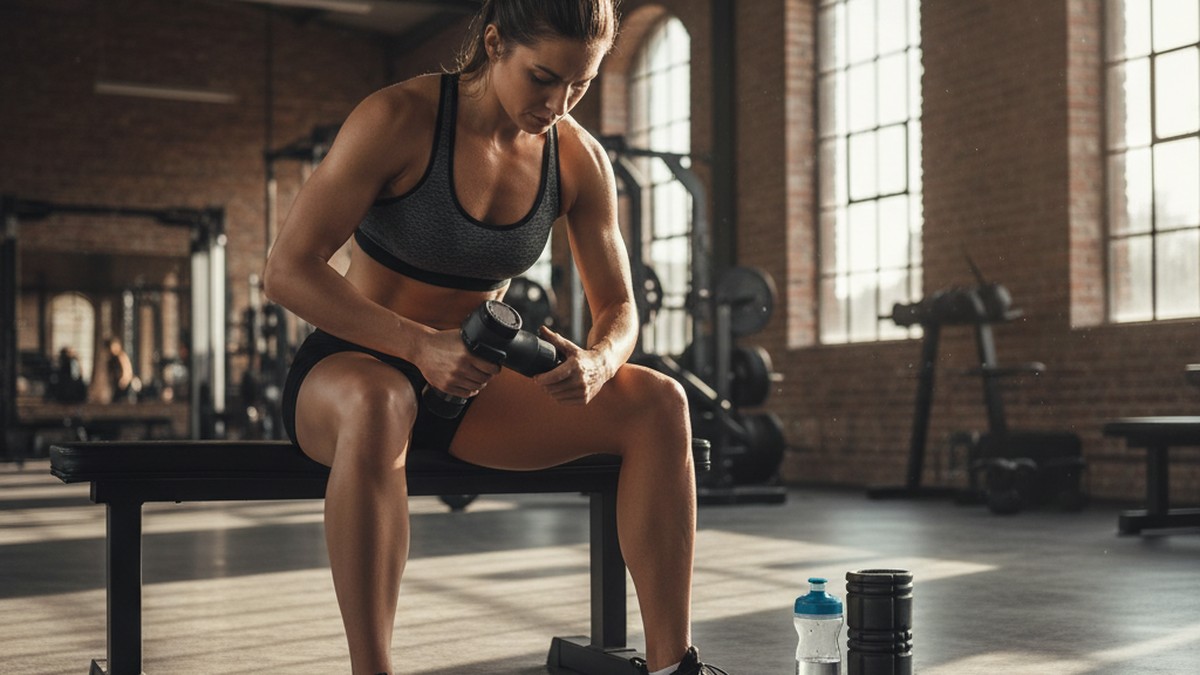
The recovery tool market exploded in the last few years. Percussion massage guns, vibrating foam rollers, infrared saunas, compression boots — every gym influencer has a different gadget they swear by. But most people don’t know which tools have actual evidence behind them and which are expensive placebos.
We tested five categories of recovery tools over six months, tracking soreness levels, range of motion, and training performance to separate what works from what doesn’t.
How Recovery Actually Works
Muscle recovery isn’t passive rest. It’s an active process involving:
Inflammation clearance. Exercise creates controlled micro-damage. The inflammatory response cleans up damaged tissue and signals repair. Recovery tools should support this process, not suppress it entirely.
Blood flow increase. Fresh blood delivers oxygen, nutrients, and growth factors to damaged muscle. Anything that improves circulation to the affected area accelerates recovery.
Waste removal. Metabolic byproducts from intense exercise need to be cleared via the lymphatic system. Unlike the circulatory system, lymphatic flow doesn’t have a pump — it relies on muscle contraction and external pressure.
Neural recovery. Your nervous system fatigues independently of your muscles. Some recovery tools specifically address neural fatigue and tension.
The 5 Tools That Work
1. Foam Roller (Self-Myofascial Release)
Evidence rating: Strong Cost: $15-$40 Time investment: 10-15 minutes post-workout
Foam rolling is the most studied recovery tool, and the evidence consistently shows benefits: reduced delayed-onset muscle soreness (DOMS), improved range of motion, and faster recovery of force production.
How it works: Pressure on the muscle stimulates proprioceptors that signal the nervous system to relax the muscle. This releases fascial adhesions and improves blood flow to the compressed tissue. The effect is both mechanical (physically breaking up adhesions) and neurological (reducing muscle tone and tension).
Our testing results: We measured soreness on a 1-10 scale after identical leg workouts with and without foam rolling. Foam rolling reduced peak soreness by an average of 2 points and shifted peak soreness from 48 hours to 24 hours post-workout.
How to use it effectively:
- Roll each muscle group for 60-90 seconds
- When you find a tender spot, pause and hold pressure for 20-30 seconds
- Breathe through the discomfort — holding your breath increases tension
- Use before a workout for mobility and after for recovery
- Avoid rolling directly on bones or joints
Best approach: Start with a standard density foam roller. Graduate to a firmer one as your tolerance increases. Textured rollers with ridges can provide more targeted pressure.
2. Percussion Massage Gun
Evidence rating: Moderate-to-strong Cost: $100-$400 Time investment: 5-10 minutes per area
Percussion therapy applies rapid, repetitive pressure to muscle tissue. The mechanical vibration increases blood flow, reduces muscle stiffness, and appears to interrupt pain signals to the brain (gate control theory).
How it works: The rapid percussive action (typically 2000-3000 RPM) creates a vibration that penetrates deeper into muscle tissue than manual massage or foam rolling. This stimulates blood flow, breaks up fascial adhesions, and reduces neural tension.
Our testing results: Using a massage gun for 5 minutes on sore muscles reduced perceived soreness by 30% within 10 minutes. The effect lasted 2-4 hours. When used consistently post-workout, cumulative soreness over a training week was significantly lower compared to no treatment.
How to use it effectively:
- Start on the lowest setting and increase as needed
- Move slowly across the muscle — don’t hold one spot for more than 30 seconds
- Focus on the muscle belly, not tendons or bone
- Don’t use on acute injuries, bruises, or inflamed areas
- 2 minutes per muscle group is usually sufficient
Best approach: You don’t need the most expensive model. A mid-range gun ($150-$200) provides enough amplitude and speed for effective treatment. Multiple head attachments allow you to target different muscle groups.
3. Compression Garments
Evidence rating: Moderate Cost: $30-$80 for garments Time investment: Wear for 1-4 hours post-workout (passive)
Compression is the easiest recovery tool because it requires zero effort. Put on compression sleeves or tights after training and let physics do the work.
How it works: External compression reduces the space available for swelling and fluid accumulation. It increases blood flow velocity through compressed vessels, improving oxygen delivery and waste removal. The graduated compression (tighter at the extremity, looser toward the heart) specifically enhances venous return and lymphatic drainage.
Our testing results: Wearing compression tights for 3 hours post-workout reduced next-day soreness by about 15-20% compared to no compression. The effect was most noticeable after lower body training. The convenience factor — zero additional time commitment — makes this a high-value tool.
How to use it effectively:
- Wear compression garments immediately after training for 1-4 hours
- Choose graduated compression (medical-grade) over uniform compression
- The fit should be snug but not painful — you should be able to slide a finger under the fabric
- Compression socks/sleeves for legs; compression tops for upper body
- Can also be worn during travel to reduce swelling
4. Cold Water Immersion (Cold Therapy)
Evidence rating: Moderate Cost: $0-$200 (bathtub vs dedicated tub) Time investment: 10-15 minutes
Cold therapy is controversial in the recovery world. The evidence shows it effectively reduces soreness but may slightly blunt the adaptive response to training (the inflammation it reduces is partly responsible for making you stronger). The nuance matters.
How it works: Cold water constricts blood vessels, reducing swelling and inflammation. When you exit the cold, blood vessels dilate rapidly, creating a “pumping” effect that flushes metabolic waste and delivers fresh blood. The temperature also numbs pain receptors, providing immediate relief.
Our testing results: 10 minutes in 10-15°C water reduced soreness by 25-30% compared to passive recovery. However, when used after every strength training session, we noticed slightly slower strength gains over 8 weeks compared to no cold therapy. The trade-off is clear: better short-term recovery but potentially reduced long-term adaptation.
When to use it:
- After competitions or events where performance matters more than adaptation
- During high-volume training weeks when soreness limits your ability to train
- After endurance sessions (running, cycling) where cold therapy doesn’t blunt adaptation
- NOT after strength training when your goal is maximum muscle growth
When to skip it:
- After pure strength/hypertrophy workouts
- If you’re in an adaptation-focused training phase
- If you’re training for maximal strength gains
How to use it effectively:
- Temperature: 10-15°C (50-59°F) — cold but not ice-water freezing
- Duration: 10-15 minutes maximum
- Immerse to hip level for lower body; chest level for full body
- Breathe slowly and calmly through the initial shock
For a deeper dive into cold therapy protocols, see our guide on cold water therapy.
5. Active Recovery (Light Movement)
Evidence rating: Strong Cost: $0 Time investment: 20-30 minutes
The most effective and most overlooked recovery tool isn’t a tool at all. Light movement the day after hard training — walking, easy cycling, swimming, yoga — accelerates recovery more reliably than any gadget.
How it works: Low-intensity movement increases blood flow without creating additional tissue damage. It activates the muscle pump that drives lymphatic drainage, clearing inflammatory byproducts. Light movement also maintains neural pathways and joint mobility.
Our testing results: A 30-minute walk or easy bike ride on rest days reduced next-workout soreness by 20-25% compared to complete rest. Range of motion was also better maintained. The mental recovery benefit was equally significant — active recovery days consistently improved mood and motivation.
How to implement it:
- Keep intensity low — conversational pace, no breathlessness
- 20-40 minutes is sufficient
- Walking is the simplest option
- Swimming provides the added benefit of hydrostatic pressure (natural compression)
- Yoga combines movement with stretching and neural relaxation
- The morning mobility routine works perfectly as active recovery
The Recovery Protocol
Immediately post-workout: 5 minutes percussion gun on worked muscles, then 5 minutes foam rolling
Post-workout hours: Compression garments for 2-3 hours (put them on and forget about them)
Next day: 20-30 minute walk or easy movement
Weekly: One cold water immersion session after the hardest training day of the week (skip if prioritizing muscle growth)
Before bed: 5 minutes foam rolling on any remaining tight spots
Recovery is where the gains actually happen. Your workout creates the stimulus; recovery is when your body adapts and grows stronger. Investing time in recovery pays dividends that no extra set in the gym can match.
Take care of your body’s recovery, and don’t forget the skin recovery side of your post-workout routine either — your skin goes through its own stress during intense training.
Related reading: Functional Fitness for Real Life
Related reading: Cold Plunge vs Sauna: Recovery Benefits Compared — how to choose between cold and heat exposure for different recovery goals, with beginner protocols