Evo SL vs Novablast 6, Plus Novablast 5 vs 6
Evo SL vs Novablast 6 on weight, stack, drop, and price, plus a Novablast 5 vs 6 table from ASICS pages. Who each shoe suits, with no wear test.

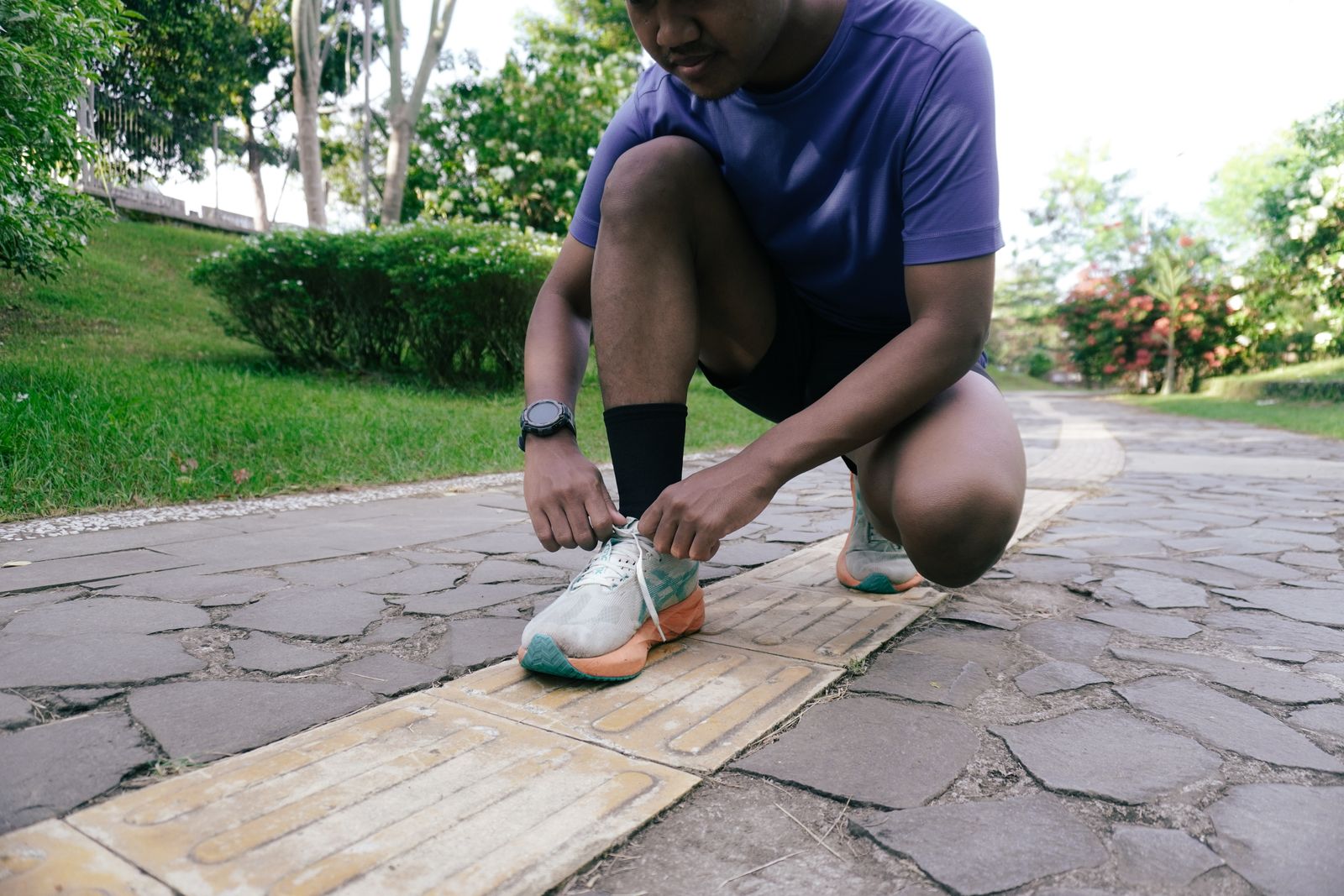
Photo: Yazid N / Pexels. Contextual stock photograph, not a product test or endorsement. License.
This post contains affiliate links; we may earn a commission at no cost to you.
Code ROOTEDGLOW10 takes 10% off a one-time purchase at Mirai Skin. It cannot be combined with other product or order discounts.
Mirai Skin ships from South Korea. Contiguous US (48 states and Washington, DC): $9 for orders up to 1.3 kg, or free from $80 after discounts when the order is 1.3 kg or less. Heavier US orders cost more. EU: $11 flat per order, and that free-shipping threshold does not apply. Other countries: the rate is shown at checkout. Allow 3–5 business days to process, then usually 7–14 business days after dispatch. Duties or taxes may apply and are paid by the buyer.
This post contains affiliate links; we may earn a commission at no cost to you.
The adidas Adizero Evo SL keeps turning up in runners’ rotation posts on X, often next to an ASICS trainer. A rotation post from 31 October listing the Evo SL drew 21 replies, and another paired it with the ASICS Superblast 3. The ASICS Novablast 6, out since 1 July 2026, is the shoe most often weighed against it at the same price.
This comparison uses the brands’ published specs and RunRepeat’s lab reviews of the Evo SL and the Novablast 6. A later section compares the Novablast 5 and Novablast 6 using ASICS’s own numbers only. Rooted Glow has not worn, run in or measured any of these shoes. Figures were checked on 9 November 2026.
Photo: Yazid N on Pexels. Illustrative running photo, not a photo of either shoe.
Spec table
| adidas Adizero Evo SL | ASICS Novablast 6 | |
|---|---|---|
| US list price | $150 (adidas US) | $155 (ASICS US) |
| Brand weight | 224 g, per RunRepeat’s listing of the brand spec | 253 g (8.9 oz), ASICS US |
| Lab weight (RunRepeat) | 223 g (7.9 oz) | 249 g (8.8 oz) |
| Brand stack, heel / forefoot | 38.5 / 32 mm (men’s US 9, as cited by RunRepeat) | 41.5 / 33.5 mm (men’s, as listed in Road Trail Run’s review) |
| Lab stack, heel / forefoot (RunRepeat) | 36.1 / 28.1 mm | 39.2 / 32.1 mm |
| Drop, brand / lab | 6.5 mm / 8.0 mm | 8 mm / 7.1 mm |
| Midsole foam | Full-length Lightstrike Pro | FF BLAST MAX with an FF TURBO SQUARED forefoot pod |
| Plate | None (RunRepeat notes a small midfoot shank) | None |
| Outsole | Thin Continental rubber | ASICSGRIP in the forefoot |
| Midsole softness, lab (lower is softer) | 43.5 Asker C | 35.1 Asker C |
| Flexibility, lab (force to bend; lower is more flexible) | 9.8 N | 15.5 N |
| Energy return, lab | 73.5% | 69.1% |
| Shock absorption, lab | 147 SA | 143 SA |
| Toebox durability, lab (1 to 5) | 1 | 4 |
| RunRepeat overall score | 94 | 93 |
Lab numbers come from RunRepeat’s reviews, both run on its methodology 2.5, so treat small gaps as small. Brand weights refer to different sample sizes, so compare the lab weights.
How they differ
Weight. The Evo SL is about 26 g lighter per shoe in RunRepeat’s lab. RunRepeat calls it “insanely lightweight for its size.”
Cushion height and feel. The Novablast 6 sits about 3 mm taller at the heel and 4 mm taller at the forefoot in the lab, and its midsole measured softer (35.1 vs 43.5 on the Asker C scale). The Evo SL is the firmer, lower shoe.
Foam. The Evo SL uses Lightstrike Pro, the foam from adidas’s racing line, for the whole midsole. ASICS pairs FF BLAST MAX with an FF TURBO SQUARED pod in the forefoot. RunRepeat says the premium foam on the Novablast 6 doesn’t fill the whole midsole, despite how it looks from the side.
Flex and drop. The Evo SL bent with less force in RunRepeat’s test (9.8 N vs 15.5 N). Its measured drop (8.0 mm) came out higher than the brand’s 6.5 mm, while the Novablast 6 measured 7.1 mm against ASICS’s 8 mm.
Upper durability. This is the clearest split. The Evo SL’s single-layer mesh scored 1 out of 5 in RunRepeat’s toebox abrasion test. The Novablast 6 scored 4. If you tend to wear holes through toeboxes, that matters more than a few grams.
Price. $150 vs $155 at US list price. Adidas US showed the Evo SL on sale at the 9 November 2026 check, and sale prices change daily.
What the reviewers say each shoe is for
RunRepeat’s sub-scores rate the Evo SL 90 for daily running, 92 for tempo and 85 for racing. It calls the shoe versatile across paces and distances and flags the short tongue and the laces as weak points.
It rates the Novablast 6 90 for daily running, 86 for tempo and 73 for racing. It likes the lighter build, upgraded upper and forefoot foam. It also says the small price rise and reduced heel bounce make the update “a tougher sell for heel strikers.”
Those are RunRepeat’s findings from its own testing. They aren’t a forecast of how either shoe will feel on your feet.
Who each shoe suits
The Evo SL may suit you if:
- You want one light shoe for easy runs and faster sessions.
- You prefer a firmer, lower ride with more ground feel.
- You don’t usually wear through the toebox of your shoes.
The Novablast 6 may suit you if:
- Most of your running is easy and long, and you want more cushion underfoot.
- You prefer a softer, taller ride.
- You want a more durable upper.
Many runners keep both types: a cushioned shoe for easy days and a lighter one for workouts. Our running shoe rotation guide explains how to give pairs different jobs. For other options, see the lists for beginners and intermediate runners, and our spec guides to the Novablast 5, Nike Vomero Plus and Nike Alphafly 4.
ASICS Novablast 5 vs Novablast 6
This table uses numbers ASICS publishes. It does not use RunRepeat’s lab stack, weight, or softness scores. Those lab figures stay in the Evo SL comparison above, and they are a different measurement from the brand table.
| Novablast 5 | Novablast 6 | |
|---|---|---|
| US list price | $150, men’s US page | $155, men’s US page |
| Men’s weight | 255 g (9 oz), US page. ASICS New Zealand also lists 255 g | 253 g (8.9 oz), US page. New Zealand lists 253 g |
| Women’s weight | 225 g, New Zealand comparison | 215 g, New Zealand comparison |
| Heel drop | 8 mm, US page | 8 mm, US page |
| Stack height | Not printed on the US page or the New Zealand comparison | Not printed on the US page or the New Zealand comparison |
| Foam | FF BLAST MAX | FF BLAST MAX, plus an FF TURBO SQUARED trampoline pod in the forefoot |
| Upper | Engineered jacquard mesh, US page. New Zealand says jacquard mesh | Engineered woven, New Zealand comparison |
| Outsole | AHAR LO, New Zealand comparison | ASICSGRIP in the forefoot on the US page. New Zealand lists ASICSGRIP and AHAR LO |
| Support | Neutral, US page | Neutral, US page |
The men’s listed gap is 2 g. The women’s listed gap is 10 g. Those are different sample sizes from each other, and neither page states that the US weight and the New Zealand weight were weighed on the same size. Treat them as the brand’s published figures, not as a scale reading from this site.
ASICS’s New Zealand article, dated 19 July 2026, still calls the Novablast 5 a lightweight daily trainer with FF BLAST MAX. It calls the Novablast 6 a softer, more energetic update because of the forefoot pod, and it says both still cover easy running through moderate tempo. That is ASICS’s description of the shoes. It is not a report of how either shoe felt on a Rooted Glow run.
The Novablast 5 spec guide cites an ASICS New Zealand brochure for a men’s total stack of 41.5 mm at the heel and 33.5 mm in the forefoot. This page does not copy that stack into the table, because the brochure was not re-read for this update, and because ASICS has not printed a matching Novablast 6 stack on the pages checked on 9 November 2026.
Who the Novablast 5 is for, and who the Novablast 6 is for
The Novablast 5 may suit you if you want the FF BLAST MAX daily trainer ASICS still sells at $150, with the jacquard mesh upper and the AHAR LO outsole, and you do not need the forefoot pod.
The Novablast 6 may suit you if you want that pod, the woven upper, and forefoot ASICSGRIP, and the $155 US price is acceptable. ASICS lists it slightly lighter than the 5 in both the men’s and women’s samples. A 2 g men’s gap is a small listed difference.
Neither description is a reason to retire a Novablast 5 that already fits. The Evo SL, above, is the lighter non-ASICS option in this article if the question is cushioned trainer versus a lower, firmer shoe.
Easy days, tempo days and pace
Shoe choice often follows the session. If you’re not sure what “easy” or “tempo” pace means for you, the Rooted Glow running pace calculator turns a recent race time into training paces. Our zone 2 guide covers the easy end.
Before you buy
Try shoes on in the socks you run in, late in the day if you can. Check toe room, heel hold and any pressure points. Read the seller’s return policy before running outdoors in them. Nothing in the sources here shows either shoe prevents injury.
A note on the Evo SL 2: on 9 November 2026 there was no adidas product page or published spec sheet for it in this check. Some retailers list new colors of the original as “SL 2.” A comparison can wait until adidas publishes details.
For long sunny runs, see our sunscreen for running guide. Glow Coded compares two popular Korean sunscreens in Round Lab Birch Juice vs Beauty of Joseon Relief Sun, and Mirai Skin is our affiliate skincare shop.
Frequently asked questions
Is the Evo SL lighter than the Novablast 6?
Yes. RunRepeat’s lab weighed the Evo SL at 223 g and the Novablast 6 at 249 g.
Which is softer, the Evo SL or the Novablast 6?
The Novablast 6. RunRepeat measured its midsole at 35.1 on the Asker C scale, compared with 43.5 for the Evo SL, where a lower number is softer.
Does either shoe have a carbon plate?
No. Neither has a plate. RunRepeat notes a small midfoot shank in the Evo SL.
How much do they cost?
The US list prices are $150 for the Evo SL and $155 for the Novablast 6, as checked on 9 November 2026. Retailers often discount both.
Which is better for long runs?
The Novablast 6 has more stack and a softer midsole, which many runners prefer for long easy runs. RunRepeat also says the Evo SL can handle a full marathon. Comfort on your feet should decide.
Has Rooted Glow tested these shoes?
No. This comparison uses adidas and ASICS published specs and RunRepeat’s and Road Trail Run’s published reviews. There is no first-hand fit or mileage to report.
How do the Novablast 5 and Novablast 6 differ?
ASICS lists both as neutral daily trainers with an 8 mm drop and FF BLAST MAX foam. The 6 adds an FF TURBO SQUARED pod in the forefoot, an engineered woven upper, and ASICSGRIP in the forefoot. The US list prices are $150 and $155. Men’s listed weights are 255 g and 253 g. Women’s listed weights, from ASICS New Zealand, are 225 g and 215 g.
Who is the Novablast 5 for, and who is the Novablast 6 for?
ASICS says both cover easy running through moderate tempo. The 5 is the current FF BLAST MAX trainer without the forefoot pod. The 6 is the update with that pod, a woven upper, and forefoot ASICSGRIP. Fit decides. This site has not run in either shoe.
Sources
- RunRepeat, adidas Adizero EVO SL lab review: https://runrepeat.com/adidas-adizero-evo-sl
- RunRepeat, ASICS Novablast 6 lab review (Carlos Sánchez, 19 July 2026): https://runrepeat.com/asics-novablast-6
- ASICS US, Novablast 6 product page: https://www.asics.com/us/en-us/novablast-6/p/ANA_1011C243-250.html
- Road Trail Run, ASICS Novablast 6 multi-tester review (May 2026): https://www.roadtrailrun.com/2026/05/asics-novablast-6-multi-tester-review.html
- adidas US, Adizero EVO SL listing: https://www.adidas.com/us/adizero_evo_sl-running-speed-road
- ASICS US, Novablast 5: https://www.asics.com/us/en-us/novablast—5/p/ANA_1011B974-500.html
- ASICS New Zealand, Novablast 6 vs Novablast 5, 19 July 2026: https://www.asics.com/nz/en-nz/blog/article/novablast-6-vs-novablast-5-whats-changed-in-the-latest-update