Best Sunscreen for Running: Formats, Sweat and Reapplying
Sweat, eyes, reapplying mid-run: how to choose a sunscreen for running and outdoor sports, what water resistant means, and light Korean picks by format.

This post contains affiliate links; we may earn a commission at no cost to you.
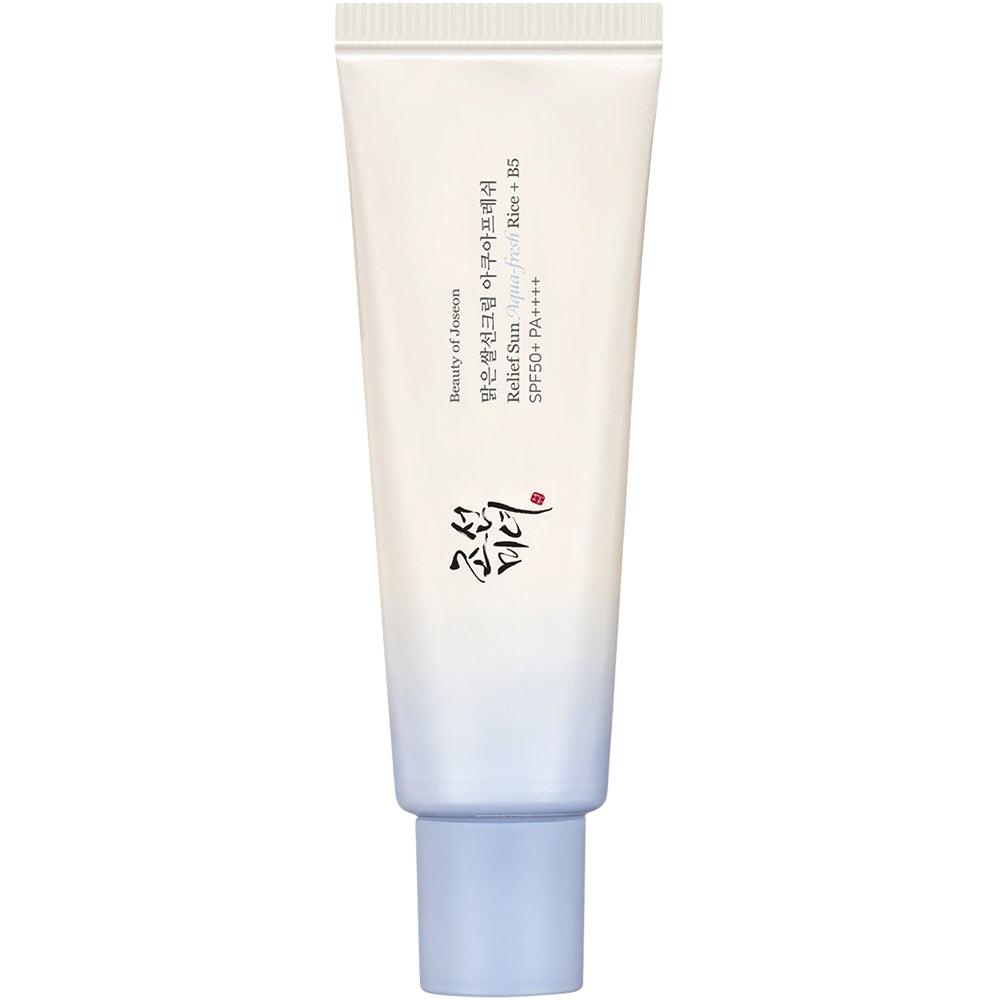
Product photo: Beauty of Joseon Relief Sun Aqua-fresh Rice+B5 (SPF50+ PA++++) 50ml. Source image.
This post contains affiliate links; we may earn a commission at no cost to you.
Code ROOTEDGLOW10 takes 10% off at Mirai Skin (one code per order).
Mirai Skin ships from South Korea: $11 flat to the EU, other rates at checkout; usually 7–14 business days after a 3–5 day dispatch. Import duties, if any, are paid by the buyer.
The best sunscreen for running is the one you’ll actually wear for the whole run. Look for broad-spectrum protection, SPF 30 or higher, and a “water resistant (40 minutes)” or “(80 minutes)” label, in a format you can reapply on the move. A stick is easiest mid-run. A light fluid sits well under a cap. On long runs, reapply.
This guide is about choosing a sunscreen. For the full before-and-after routine, see Korean skincare for runners. Later on, there’s a section for team sports, cycling and outdoor gym sessions.
What to Look for in a Running Sunscreen
The American Academy of Dermatology (AAD) recommends that everyone use a sunscreen with three things, per its sunscreen FAQs:
- Broad-spectrum protection. This means it protects against both UVA and UVB rays.
- SPF 30 or higher.
- Water resistance.
The US Food and Drug Administration (FDA) adds that SPF is about the amount of UV exposure, not time. An SPF 15 sunscreen doesn’t mean you can stay out 15 times longer, as the FDA’s sunscreen guide explains.
Korean sunscreens are sold under Korea’s own labeling system, with PA ratings for UVA. We explain the differences in why Korean sunscreen is different and compare filter types in Korean chemical vs mineral sunscreens.
Stick, Fluid or Cream: Which Format for Which Run
| Run type | Best format | Why |
|---|---|---|
| Short easy run, under an hour | Light fluid or gel cream | Goes on before you leave and sits well under a cap |
| Long run or race | Fluid before, stick to reapply | You can reapply a stick without wet, sweaty hands |
| Trail run with sun and shade | Fluid plus a stick in your vest | Pockets and vests fit a stick easily |
| Hot, sweaty day | Water-resistant formula plus a stick | Sweat and toweling wear sunscreen off |
The format matters less than the habit. The AAD puts it simply: “The best type of sunscreen is the one you will use again and again.”
Why No Sunscreen Is Sweat-Proof
No sunscreen is sweat-proof. The AAD says “no sunscreen is ‘waterproof’ or ‘sweatproof’” and that manufacturers aren’t allowed to use those terms in the US. The FDA explains that “all sunscreens eventually wash off,” and that products labeled water resistant must state whether they stay effective for 40 or 80 minutes when swimming or sweating.
You’ll still see “waterproof” in some product names, especially on products made for markets outside the US. Treat it as a name, not a promise, and reapply anyway.
To keep sunscreen out of your eyes:
- Use a stick on your forehead and around your eyes instead of a runny lotion.
- Apply about 15 minutes before you start, so it has time to set. Both the FDA and AAD give this timing.
- Wear a cap, visor or headband to catch sweat before it runs down.
- Dab sweat away rather than wiping across your face.
Picks by Format
The products below are chosen for format and the features their Mirai listings describe. We haven’t tested them. SPF and PA ratings are as stated on each product page at Mirai Skin, and prices and stock can change.
Stick: Round Lab Birch Juice Moisturizing Sun Stick SPF 50+
This post contains affiliate links; we may earn a commission at no cost to you.
The Round Lab Birch Juice Moisturizing Sun Stick is listed as SPF 50+ PA++++ with broad-spectrum protection. The listing says it’s mess-free and portable for reapplying on the go, with a lightweight finish, and to reapply every 2 to 3 hours. It doesn’t give a water-resistance rating.
Stick: Banila Co UV Defense Waterproof Sun Stick SPF 50+
The Banila Co UV Defense Waterproof Sun Stick is listed as SPF 50+ PA++++. The listing describes a non-sticky, water-repelling formula and says to reapply every 2 to 3 hours, “especially during outdoor activities.” It gives no 40- or 80-minute water-resistance rating. “Waterproof” is part of the product name, so read it in light of the US label rules above.
Fluid: Beauty of Joseon Relief Sun Aqua-fresh Rice + B5
The Beauty of Joseon Relief Sun Aqua-fresh is a chemical sunscreen listed as SPF 50+ PA++++. The listing describes a light, almost watery gel-cream texture that absorbs quickly with no white cast. The listing also says it isn’t designed as a heavy-duty sport sunscreen and suggests a dedicated water- and sweat-resistant formula for a long run, so keep it for shorter runs or pair it with a stick.
For more sticks to compare, our sister site Glow Coded has a roundup of the best Korean sunscreen sticks. You can also browse Mirai’s full sunscreen collection.
How Much and When to Reapply on Long Runs
The AAD’s guidance:
- Most adults need about 1 ounce of sunscreen, roughly a shot glass, to cover skin not covered by clothing.
- Apply to dry skin 15 minutes before going outdoors.
- Reapply approximately every two hours, or after swimming or sweating, following the label.
- Protect your lips with a lip balm that has SPF 30 or higher.
The FDA lists commonly missed spots: ears, nose, lips, the back of the neck, hands, the hairline and any exposed scalp. If you run in a vest or singlet, add your shoulders.
On a long run, a practical rhythm is to apply before you leave and reapply with a stick at the two-hour mark, or sooner if you’ve been sweating heavily or toweling off.
Sun Habits Beyond Sunscreen
Sunscreen is one layer. The FDA’s sun safety tips also include:
- Timing. Limit time in the sun between 10 a.m. and 2 p.m., when the sun’s rays are most intense. Early-morning or evening runs help.
- Clothing. Cover exposed skin where you can, and wear sunglasses and a hat.
- Clouds. The AAD notes that up to 80% of the sun’s harmful UV rays can get through clouds, so cloudy runs still count.
If you’re new to running, our beginner’s running guide covers building a routine, and our simple gym skincare kit has room for a sunscreen stick. Running in the cold? Our guide to windburn on your face covers winter runs.
Sunscreen for Athletes: Team, Gym and Cycling Sports
Runners aren’t the only ones who sweat sunscreen off. Football, tennis, cycling, hiking, golf and outdoor training sessions all mean long stretches outside, with their own quirks. The same rules apply: broad spectrum, SPF 30 or higher, water resistant, and reapplied in breaks.
| Sport | Typical exposure | Sweat | Format that tends to suit |
|---|---|---|---|
| Field and court sports | Matches and practice, often midday | High | Water-resistant body sunscreen plus a face stick |
| Cycling | Long rides, helmet and glasses | High | Stick under helmet lines and around glasses, fluid for arms and legs |
| Hiking | Hours outside, often at altitude | Moderate | Fluid before, stick in a pocket |
| Golf and tennis | Long sessions with breaks | Moderate to high | Light fluid, reapplied at breaks |
| Outdoor gym and HIIT | Shorter, intense | High | Light water-resistant formula |
Best Sunscreen for Sweating: Light Textures
If you sweat a lot, a light texture that doesn’t feel greasy can be easier to wear. Two picks, as their listings describe them:
- The innisfree Intensive Leisure Sun Stick SPF 50+ is listed as SPF 50+ PA++++. The listing calls it a matte formula and names runners, cyclists and hikers among the people it’s made for. It gives no 40- or 80-minute water-resistance rating, so reapply after heavy sweating.
- The COSRX Ultra-Light Invisible Sunscreen SPF 50 is listed as SPF 50 PA++++. The listing describes a weightless, non-greasy finish with no white cast. It also says the formula isn’t marketed as water- or sweat-resistant and points heavy sweaters to a dedicated water-resistant sunscreen, so use it for easy sessions and carry a stick.
For arms and legs, the ILLIYOON Mild Easy Wash Sun Cream SPF 50+ is a 150 ml face-and-body sunscreen listed as SPF 50+ PA++++. The listing describes a light, fast-spreading texture that rinses off with water and a facial cleanser. The page doesn’t list a water-resistance rating, so reapply after heavy sweating.
Keeping Sunscreen Out of Your Eyes: Forehead and Helmet Lines
Helmets, goggles and sunglasses rub and trap sweat. Apply a stick along the forehead, temples and helmet strap lines before you warm up, and reapply at half-time, water breaks or transitions. A sweatband or visor helps keep sunscreen out of your eyes.
Skin Care for Athletes After Training
After a session, wash off sweat and sunscreen with a gentle cleanser, then moisturize. Our post-workout K-beauty recovery routine walks through it, and our skincare and training calendar helps you plan skincare around race and match days. Hydration matters on hot days too; see our guide to electrolyte drinks for runners.
If you notice a new or changing mole or a spot that doesn’t settle, see a doctor or dermatologist.
Frequently Asked Questions
What is the best sunscreen for running?
A broad-spectrum sunscreen with SPF 30 or higher, labeled water resistant, in a format you can reapply on the run. Many runners apply a light fluid before they leave and carry a stick to reapply.
Is there a sweat-proof sunscreen?
No. In the US, sunscreens can’t be labeled “sweatproof” or “waterproof.” Look for “water resistant (40 minutes)” or “(80 minutes)” instead, per the FDA.
How do I stop sunscreen running into my eyes?
Use a stick around your eyes and forehead, apply it 15 minutes before you start so it can set, and wear a cap or headband.
How often should runners reapply sunscreen?
About every two hours, and sooner after heavy sweating or toweling off, following the label. That’s the AAD’s guidance.
What sunscreen is best for athletes?
The same rules apply as for runners: broad spectrum, SPF 30 or higher and water resistant, in a format you can reapply during breaks.
Do I need sunscreen for a cloudy or early-morning run?
Yes. The AAD says up to 80% of the sun’s harmful UV rays can get through clouds, and it recommends sunscreen every day you’re outside.
Sources
- US Food and Drug Administration. Sunscreen: How to Help Protect Your Skin from the Sun. https://www.fda.gov/drugs/understanding-over-counter-medicines/sunscreen-how-help-protect-your-skin-sun
- American Academy of Dermatology. Sunscreen FAQs. https://www.aad.org/media/stats-sunscreen