Yoga vs Pilates: Which Practice Is Better for Your Body?
A detailed comparison of Yoga and Pilates. Learn the key differences, pros and cons, and which one is right for you.

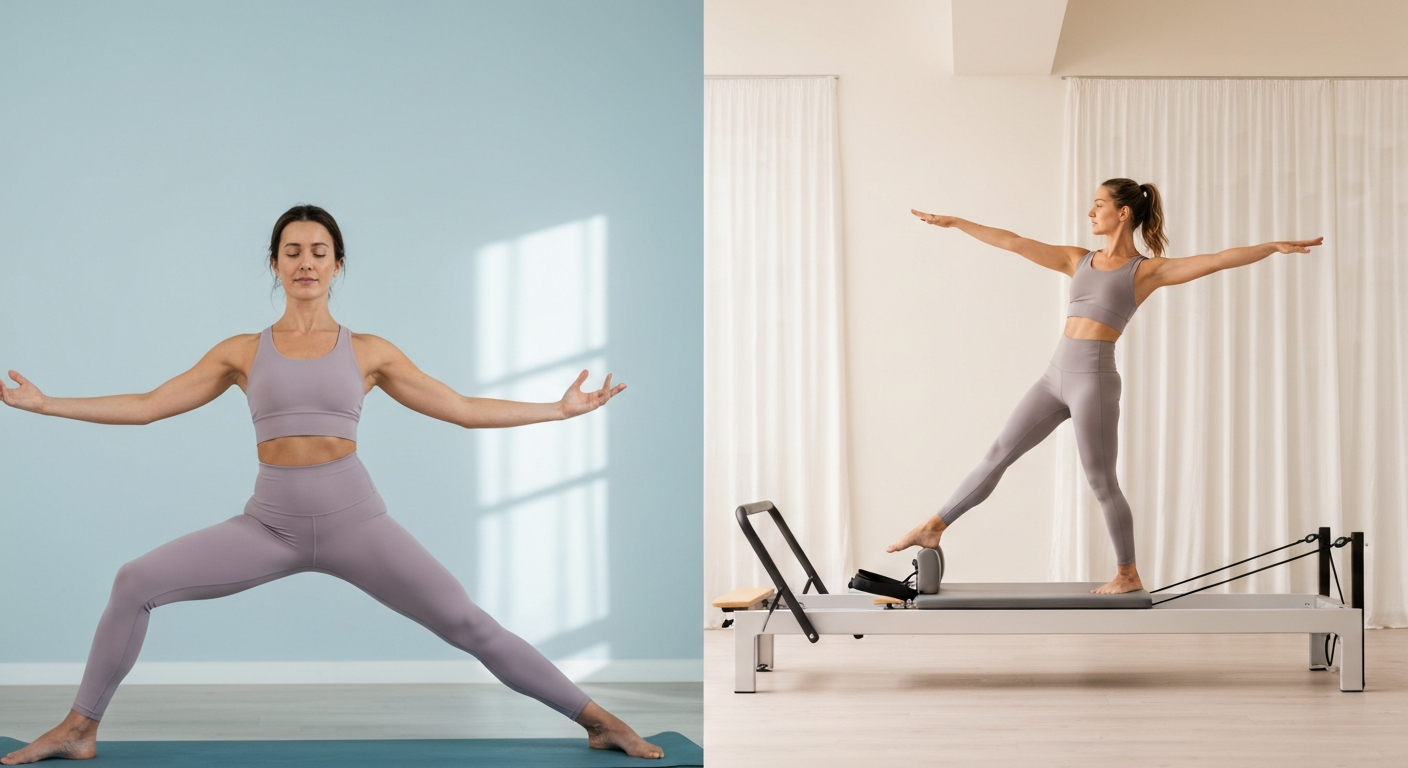
In the vast landscape of mindful movement, two practices frequently stand side-by-side, often causing confusion for those looking to embark on a journey of physical and mental well-being: Yoga and Pilates. Both promise strength, flexibility, and a deeper connection to your body, yet they stem from distinct philosophies and methodologies. At Rooted Glow, we believe in empowering you with knowledge, so you can make informed choices that truly resonate with your personal goals. Join us as we unravel the intricate threads of Yoga and Pilates, helping you understand their unique offerings and guiding you toward the practice that best serves your body and spirit.
What Is Yoga?
Yoga, an ancient practice originating in India over 5,000 years ago, is far more than just a series of physical postures. It is a holistic system designed to unite the mind, body, and spirit, fostering inner peace, balance, and self-awareness. Rooted in spiritual and philosophical traditions, yoga aims to prepare the body for meditation and enlightenment.
The practice encompasses several key components:
- Asanas (Postures): These are the physical poses that stretch and strengthen the body, improving flexibility, balance, and endurance. From foundational poses like Downward-Facing Dog to intricate inversions, asanas are designed to open energy channels and promote physical health.
- Pranayama (Breathwork): Conscious control of breath is central to yoga. Various breathing techniques are used to regulate energy, calm the nervous system, and enhance mental clarity.
- Dhyana (Meditation): A core element of yoga, meditation involves focusing the mind to achieve a state of relaxed awareness, reducing stress, and fostering inner peace.
- Yama & Niyama (Ethical Principles): These moral guidelines and observances are an integral part of the yogic path, promoting ethical conduct and self-discipline.
There are numerous styles of yoga, each with its own emphasis and pace. Hatha yoga is often slower and focuses on holding poses. Vinyasa yoga is characterized by a flowing sequence of movements synchronized with the breath. Ashtanga is a more rigorous, set sequence. Restorative yoga uses props to support the body in gentle stretches, promoting deep relaxation, while Yin yoga targets deeper connective tissues through long-held passive poses. Regardless of the style, the underlying principle remains the integration of movement, breath, and mindfulness to create a profound sense of well-being.
What Is Pilates?
Pilates, in contrast to yoga’s ancient origins, is a relatively modern exercise system developed in the early 20th century by Joseph Pilates. Originally named “Contrology,” Pilates was conceived as a method to strengthen the mind and body, particularly focusing on rehabilitation and physical conditioning. Joseph Pilates himself developed the method during World War I to help rehabilitate injured soldiers, emphasizing core strength, controlled movements, and precision.
The core principles of Pilates, often referred to as “The Six Principles,” are:
- Centering: All movements originate from the core, often called the “powerhouse,” encompassing the abdominal muscles, lower back, hips, and glutes.
- Concentration: Full mental focus on each exercise, ensuring proper form and maximizing effectiveness.
- Control: Movements are performed with deliberate control, avoiding momentum and abrupt motions.
- Precision: Every movement has a purpose and a specific placement, emphasizing quality over quantity.
- Breath: Specific breathing patterns are used to facilitate movement, engage the deep abdominal muscles, and oxygenate the body.
- Flow: Exercises are designed to transition smoothly from one to the next, creating a graceful and efficient sequence.
Pilates is primarily known for two main forms: Mat Pilates and Reformer Pilates. Mat Pilates utilizes your body weight and sometimes small props (like resistance bands or magic circles) to perform exercises on a mat. Reformer Pilates, on the other hand, involves specialized equipment, most notably the Reformer machine, which uses springs and pulleys to provide resistance and assistance, allowing for a wider range of exercises and targeted muscle engagement. Both forms aim to build long, lean muscles, improve posture, enhance flexibility, and prevent injuries by strengthening the deep stabilizing muscles of the core.
Head-to-Head Comparison: Yoga vs Pilates
When deciding between yoga and Pilates, understanding their fundamental differences across various aspects is crucial. Here’s a quick overview:
| Feature | Yoga | Pilates |
|---|---|---|
| Origin & Philosophy | Ancient Indian spiritual and philosophical practice | Early 20th-century rehabilitation and physical conditioning method |
| Primary Focus | Holistic well-being: mind, body, spirit integration, flexibility | Core strength, controlled movement, posture, rehabilitation |
| Core Engagement | Engaged for stability and balance; often secondary to overall pose | Central and foundational to every movement; “powerhouse” origin |
| Flexibility Emphasis | High; often a primary goal, stretching muscles and connective tissue | Moderate to high; flexibility developed through controlled range |
| Strength Building | Builds functional strength, endurance, and bodyweight strength | Builds deep, stabilizing core strength and lean muscle tone |
| Equipment | Primarily bodyweight; props like blocks, straps, blankets | Mat work (bodyweight) or specialized apparatus (Reformer, Cadillac) |
| Pace/Flow | Varies widely (slow Hatha to fast Vinyasa); often fluid | Controlled, precise, deliberate; emphasis on quality over speed |
| Mind-Body Connection | Deeply integrated; often includes meditation and spiritual elements | Strong, focused mental concentration on physical execution |
| Spirituality | Often a central component, varying by style and instructor | Minimal to none; purely physical and mental conditioning |
| Injury Rehabilitation | Can be beneficial for gentle movement and stress reduction | Highly effective for targeted rehabilitation and prevention |
Key Differences Detailed
While both practices offer incredible benefits and share some common ground, their unique approaches lead to distinct experiences and outcomes.
Origin and Philosophy
The most profound difference lies in their origins. Yoga emerged from ancient spiritual traditions, with its physical postures (asanas) serving as a means to prepare the body for deeper meditative and spiritual practices. The goal is often enlightenment, self-realization, and a union of the individual consciousness with the universal. This deep philosophical root means that many yoga classes, even modern ones, incorporate elements of mindfulness, meditation, and a broader spiritual context.
Pilates, on the other hand, was born from a very practical, rehabilitative need. Joseph Pilates, a physical trainer, developed his method to help internees and soldiers regain strength and mobility. Its philosophy is purely physical conditioning, focusing on strengthening the body’s “powerhouse” to improve overall physical function, prevent injury, and enhance athletic performance. There is no inherent spiritual or meditative component in Pilates, though the intense concentration required can certainly lead to a meditative state.
Primary Focus and Goals
Yoga’s primary focus is holistic well-being. It seeks to balance the physical, mental, and emotional aspects of an individual. While it builds strength and flexibility, it also emphasizes stress reduction, mental clarity, and emotional regulation through breathwork and meditation. A yogi might seek peace, balance, or a deeper understanding of self.
Pilates’ primary focus is on building core strength, improving posture, and increasing body awareness through precise, controlled movements. It’s fundamentally a physical conditioning system designed to create a strong, stable body that moves efficiently and without pain. A Pilates practitioner typically aims for improved physical performance, injury prevention, and better body alignment.
Core Engagement
Both practices engage the core, but their approach differs significantly. In yoga, the core is engaged for stability and balance within a pose, often as part of a larger, full-body stretch or strength-building exercise. While important, it’s not always the explicit starting point of every movement.
In Pilates, the core (the “powerhouse”) is the absolute center of every movement. Every exercise initiates from and is supported by deep abdominal and back muscles. The emphasis is on drawing the navel to the spine, engaging the pelvic floor, and maintaining a stable torso while the limbs move. This intense, continuous core engagement is what makes Pilates so effective for strengthening the deep stabilizing muscles. For those looking to understand core strength beyond traditional crunches, Pilates offers an excellent pathway to Building a Strong Core: Beyond Crunches.
Flexibility vs. Strength
Yoga often places a strong emphasis on increasing flexibility. Many poses are designed to lengthen muscles, improve range of motion in joints, and open up the body. While strength is built through holding challenging poses and supporting body weight, flexibility is frequently a primary and immediate goal.
Pilates also improves flexibility, but it does so through controlled movements that strengthen muscles within their full range of motion. The goal is often to create a balance of strength and flexibility, ensuring that muscles are both supple and strong enough to support the body. It’s less about extreme stretches and more about functional flexibility coupled with robust stability.
Breathwork
Pranayama, or breath control, is a cornerstone of yoga. There are numerous breathing techniques, each with specific purposes – to energize, calm, cleanse, or focus the mind. The breath is often used to deepen stretches, facilitate movement, and enter a meditative state. It’s a conscious tool for manipulating energy and mental states.
In Pilates, breath is also crucial, but its role is more functional and integrated into the movement. The specific breathing pattern (often lateral or posterior breathing, expanding the rib cage) is used to engage the deep core muscles, facilitate spinal articulation, and provide oxygen to the working muscles. It’s a tool for enhancing physical performance and control, rather than a separate spiritual practice.
Equipment
Yoga is predominantly a bodyweight practice. While props like blocks, straps, blankets, and bolsters are commonly used to assist or deepen poses, they are not essential to the practice itself. The focus is on what your body can do with minimal external aid.
Pilates, while having a significant mat-based component that requires no equipment, is also famous for its specialized apparatus. The Reformer, Cadillac, Wunda Chair, and barrels are integral to many Pilates studios. These machines use springs, pulleys, and straps to provide resistance, assistance, and support, allowing for a highly targeted and effective workout that can be modified for all fitness levels and rehabilitation needs.
Who Should Choose Yoga?
Yoga is an excellent choice for individuals who:
- Seek a holistic mind-body-spirit connection: If you’re looking for more than just physical exercise and want to incorporate mindfulness, meditation, and a deeper philosophical understanding into your routine, yoga is ideal.
- Want to significantly improve flexibility: Yoga is unparalleled in its ability to lengthen muscles, increase joint mobility, and improve overall body suppleness.
- Are looking for stress reduction and mental calm: The combination of breathwork, movement, and meditation makes yoga incredibly effective for calming the nervous system and reducing anxiety.
- Desire improved balance and body awareness: Holding various poses challenges and refines your balance, enhancing proprioception.
- Prefer a practice that can be adapted to energy levels: With styles ranging from invigorating Vinyasa to deeply relaxing Restorative, yoga can meet you where you are on any given day.
- Are interested in exploring mindfulness and spiritual growth: Many yoga traditions offer a pathway for personal growth and inner exploration. If you’re interested in the broader benefits of mindful living, explore our article on The Power of Mindful Movement.
Who Should Choose Pilates?
Pilates is an exceptional choice for individuals who:
- Prioritize core strength and stability: If your goal is to build a rock-solid core, improve posture, and strengthen your deep abdominal and back muscles, Pilates is highly effective.
- Are looking for injury prevention or rehabilitation: Its emphasis on precise, controlled movements and strengthening stabilizing muscles makes it excellent for recovering from injuries (under professional guidance) and preventing future ones.
- Want to improve posture and body alignment: Pilates specifically targets the muscles responsible for good posture, helping to correct imbalances and alleviate back pain.
- Seek to build lean muscle tone without bulk: Pilates focuses on long, lean muscle development and improved muscle endurance rather than hypertrophy.
- Are athletes looking for cross-training: Many athletes use Pilates to improve core stability, body control, and movement efficiency, which can enhance performance in their primary sport.
- Prefer a structured, goal-oriented physical workout: Pilates classes are typically focused on achieving specific physical outcomes through a systematic approach.
Can You Use/Have Both?
Absolutely! In fact, incorporating both yoga and Pilates into your routine can offer a remarkably synergistic approach to your health and well-being. They complement each other beautifully, addressing different aspects of physical and mental fitness.
Yoga can provide the deep flexibility, stress reduction, and spiritual connection that Pilates doesn’t emphasize. It can open up your body, calm your mind, and improve your overall sense of balance and peace.
Pilates, in turn, can build the foundational core strength and precise body control that will enhance your yoga practice, allowing you to hold poses with greater stability and less strain. A strong core developed through Pilates can protect your back in challenging yoga inversions and deepen your stretches by providing better support.
Many individuals find that a blend of both practices creates a more well-rounded fitness regimen. You might choose to do Pilates for core strength and posture a couple of times a week, and then balance it with a yoga class for flexibility, stress relief, and mindfulness on other days. The key is to listen to your body and integrate practices that align with your evolving needs and goals.
Our Verdict
There’s no single “better” practice between yoga and Pilates; the superior choice is ultimately the one that aligns best with your individual goals, preferences, and current physical condition.
If your primary quest is for inner peace, spiritual growth, profound flexibility, and a holistic approach to well-being that integrates mind, body, and spirit, then Yoga is likely your calling. It offers a path to self-discovery and a deep sense of calm amidst life’s chaos.
If your focus is more on building a strong, stable core, improving posture, preventing injuries, and enhancing physical performance through precise, controlled movements, then Pilates will be an incredibly powerful tool in your arsenal. It’s a masterclass in body mechanics and efficient movement.
Remember, the most important thing is to start. Try a few classes of each, explore different styles, and see how your body and mind respond. Both practices offer immense benefits that can profoundly enrich your life, helping you move with more grace, live with less pain, and embrace a deeper connection to your own incredible self.
Related reading:
- Discovering Your Perfect Meditation Style
- The Benefits of Mindful Movement for Everyday Life
Frequently Asked Questions
Which is better for back pain?
Pilates typically wins for chronic back pain, especially lower back pain tied to weak core stabilizers. Its emphasis on spinal alignment, core engagement, and precise control directly targets the muscles that stabilize the lumbar spine. Yoga helps too, particularly for tension-related back pain, but pilates has stronger clinical evidence for structural issues.
Can I build real strength with yoga or pilates?
Yes, but to different degrees. Pilates builds measurable core and postural strength through resistance and controlled repetition. Yoga builds strength through bodyweight-loaded holds (warrior poses, chaturanga, arm balances) but progresses more slowly. Neither replaces traditional strength training for muscle mass, but both build functional strength.
Which is better for flexibility?
Yoga generally produces greater increases in flexibility, especially for hips, hamstrings, and shoulders, because it holds stretches longer and covers a wider range of stretching positions. Pilates improves mobility through controlled movement but doesn’t target deep flexibility to the same degree.
How often should I practice?
2-3 sessions per week is the evidence-based sweet spot for either practice. Benefits plateau with less than 2 sessions weekly; diminishing returns appear above 5. Consistency matters more than daily practice.
Can I lose weight doing yoga or pilates?
Modestly. Neither burns calories at the rate of running or HIIT, so caloric impact alone is limited. But both improve body composition through muscle engagement, stress reduction (lower cortisol helps fat loss), and improved mindfulness around eating. Real weight loss comes from combining either with diet and some form of cardio.
Do I need equipment for pilates?
Mat pilates requires no equipment and delivers most core-strengthening benefits. Reformer pilates adds resistance through spring-loaded carriages and accelerates progress, but mat work is 80% of the benefit. Yoga needs only a mat for most poses.
Which is better for stress and mental health?
Yoga has stronger evidence for stress reduction and anxiety improvement, largely due to its integration of breathwork and meditation. Pilates improves mood through movement and body awareness but is more physical and less meditative. For explicit stress management, yoga wins.
Should I do them together?
Yes — they complement each other well. Yoga 2x/week for flexibility and mental reset, pilates 2x/week for core strength and alignment, plus one strength or cardio day. That’s a balanced weekly movement practice for most people.