Snail Mucin: Everything You Need to Know (Benefits, Science & How to Use)
What snail mucin does for your skin, how it compares to hyaluronic acid and niacinamide, the research behind the Korean skincare hero ingredient, and whether it's worth adding to your routine.

Product photo: COSRX Advanced Snail 96 Mucin Power Essence 100ml. Source image.
Quick answer: Snail mucin (snail secretion filtrate) is a naturally hydrating, wound-healing ingredient that contains hyaluronic acid, glycoproteins, glycolic acid, zinc, copper peptides, and allantoin. It’s safe for daily use, non-comedogenic, layers with every other active, and delivers visible hydration and texture improvement in 4–8 weeks. The gold-standard product is COSRX Advanced Snail 96.
Let’s get the obvious out of the way: yes, snail mucin is exactly what it sounds like. It’s the slime that snails produce to protect and repair their skin as they move across surfaces. And yes, people put it on their faces. Millions of people. Daily.
We know how it sounds. When we first heard about snail mucin in skincare, our reaction was a polite but firm “absolutely not.” Then curiosity got the better of us, we tried it for a month, and now it’s one of the few products our entire team agrees on.
Here’s the full story.
A Brief History
Snail mucin in skincare isn’t a recent K-beauty invention. Chilean snail farmers in the 1980s noticed that their hands were unusually soft and that cuts healed faster than expected. This observation led to the first commercial snail mucin skincare products in South America.
Korean beauty brands picked up the ingredient in the early 2010s and, in characteristic K-beauty fashion, refined and popularized it into a global phenomenon. COSRX’s Advanced Snail 96 Mucin Power Essence, launched in 2014, became one of the best-selling skincare products in the world.
Today, snail mucin appears in essences, serums, creams, sheet masks, and eye patches from dozens of brands.
What’s Actually in Snail Mucin?
Snail secretion filtrate (the INCI name you’ll see on ingredient lists) is a complex mixture of:
- Glycoproteins. large molecules that help retain moisture and support skin structure
- Hyaluronic acid. a naturally occurring humectant that draws water into the skin
- Glycolic acid. an alpha hydroxy acid that gently exfoliates and promotes cell turnover
- Zinc. an anti-inflammatory mineral that supports healing
- Copper peptides. promote collagen synthesis and wound healing
- Antimicrobial peptides. help protect against bacterial infection
- Allantoin. a soothing compound that stimulates cell regeneration
What makes snail mucin interesting from a scientific standpoint is that it’s not a single active ingredient. It’s a naturally occurring complex that addresses multiple skin concerns simultaneously. Hydration, gentle exfoliation, anti-inflammation, and repair, all in one substance.
What the Research Says
Snail mucin research is growing, though it’s worth noting that most studies are relatively small. Here’s what the evidence supports:
Wound Healing
A 2013 study published in the Journal of Dermatological Treatment found that snail mucin cream applied after fractional CO2 laser treatment significantly accelerated wound healing compared to a control cream. Patients using the snail mucin product showed reduced redness and faster skin recovery.
Anti-Aging Properties
Research published in the Journal of Cosmetic Dermatology (2015) showed that a cream containing snail secretion filtrate improved skin hydration, reduced wrinkle depth, and increased skin elasticity over 12 weeks of use.
Hydration
Multiple studies confirm the humectant properties of snail mucin, largely attributable to its natural hyaluronic acid and glycoprotein content. A 2020 study in Molecules analyzed the composition of Cornu aspersum mucin and confirmed significant moisture-binding capacity.
Anti-Inflammatory Effects
The zinc and copper peptides in snail mucin have documented anti-inflammatory properties. In practice, this translates to reduced redness and calmed irritation, which our team observed consistently during testing.
How It’s Collected
This is a fair and important question. The collection process matters.
Reputable Korean brands use a process where snails are placed on a mesh surface in a dark, humid environment that mimics their natural habitat. The snails move freely, secreting mucin as they go. The mucin is collected from the mesh, filtered, and processed.
The snails are not harmed, squeezed, or killed in this process. They’re returned to their habitat and continue living their snail lives.
That said, “cruelty-free” claims vary by brand. If animal welfare is a concern for you (and it should be), look for brands that are transparent about their collection methods. COSRX and Mizon have both publicly documented their processes.
Some brands are now developing lab-synthesized alternatives that mimic snail mucin’s composition without involving snails at all. This is an emerging area worth watching.
What We Actually Experienced
Our team of five tested snail mucin products (primarily COSRX Advanced Snail 96) for three months. Here’s what we noticed, broken down by timeline:
Week 1 to 2
The texture took some getting used to. Snail mucin essence is viscous and slightly stringy. It doesn’t feel like anything else in a skincare routine. But it absorbs cleanly within 30 to 60 seconds, leaving skin feeling smooth and slightly dewy.
No immediate dramatic changes, but skin felt consistently hydrated throughout the day.
Week 3 to 4
Two team members with acne scarring noticed that red post-inflammatory marks were fading faster than usual. Our dry-skin tester reported that the persistent rough patches on her cheeks had smoothed out.
Week 5 to 8
This is when the cumulative effects became obvious. Skin texture improved across the board. Pores appeared less visible (likely a hydration effect). Skin looked “healthier” in a way that was difficult to quantify but easy to see.
One team member got a small cut on her chin (unrelated to skincare). She applied snail mucin over it daily. The cut healed noticeably faster than similar cuts had in the past. Anecdotal, yes. But notable.
Month 3
All five testers chose to continue using snail mucin as a permanent routine step. The consensus: it’s not a dramatic overnight fix. It’s a steady, reliable skin improver that makes everything else in your routine work better.
How to Use Snail Mucin
Snail mucin typically comes in essence or serum form. Here’s how it fits into a routine:
When to apply. After toner, before heavier serums and moisturizer. Make sure you double cleanse first so your skin is properly prepped to absorb the product. In a K-beauty night routine, it slots into the essence or serum step. Pair it with a hydrating Korean toner like the ones in Mirai Skin’s best Korean toners roundup for max absorption.
How much. A small pump or dropper-full is enough for the whole face. You don’t need much.
How to apply. Dispense into your palm, warm it between your hands, then press gently into your face. Don’t rub. The patting motion helps the product absorb without pulling at your skin.
Can you use it with other actives? Yes. Snail mucin plays well with virtually every other skincare ingredient. It’s not an “active” in the traditional sense (like retinol or vitamin C), so there are no conflicts. It actually helps buffer more irritating products.
Morning or night? Both. It’s gentle enough for twice-daily use.
Snail Mucin vs Other Ingredients
A frequent question: if snail mucin already contains hyaluronic acid, do you still need a separate HA serum? What about niacinamide? Here’s how it compares.
Snail Mucin vs Hyaluronic Acid
Hyaluronic acid is a pure humectant — it draws water into the skin and does nothing else. Snail mucin contains HA plus glycoproteins, peptides, zinc, and allantoin, so it hydrates and supports barrier repair at the same time. HA is cheaper and lighter; snail mucin does more in one step. You can layer both, but for most people snail mucin alone replaces a standalone HA serum.
Snail Mucin vs Niacinamide
Niacinamide targets pores, oil control, and pigmentation. Snail mucin targets hydration, repair, and texture. They do different jobs and work well together — niacinamide in the morning for oil control, snail mucin at night for repair. No conflict.
Snail Mucin vs Centella Asiatica (Cica)
Both are soothing, barrier-supporting ingredients popular in K-beauty. Centella is better for active redness and irritation (sensitive, post-inflammatory skin). Snail mucin is better for sustained hydration and long-term texture improvement. Many Korean products combine them.
Snail Mucin vs Retinol
Opposite ends of the spectrum. Retinol actively turns over skin cells (can irritate). Snail mucin repairs and hydrates (soothes). They’re an ideal pairing: apply retinol, wait, then layer snail mucin to buffer the irritation and speed recovery.
Who Should Use Snail Mucin?
The short answer: almost everyone. The longer answer:
Great for:
- Dehydrated skin (the hyaluronic acid and glycoproteins deliver sustained moisture)
- Acne-prone skin (anti-inflammatory and antimicrobial properties help with breakouts)
- Post-procedure skin (the wound-healing compounds support recovery)
- Aging skin (collagen-supporting peptides and gentle exfoliation from glycolic acid)
- Sensitive skin (soothing properties and minimal irritation potential)
Might not be ideal for:
- People with confirmed mollusk allergies (snails are mollusks; cross-reactivity is possible though rare)
- Those who are fundamentally uncomfortable with animal-derived products
Frequently Asked Questions About Snail Mucin
Is snail mucin safe for daily use? Yes. It’s gentle enough for twice-daily use on sensitive, acne-prone, and post-procedure skin. It has one of the lowest irritation profiles of any active skincare ingredient.
How long until snail mucin shows results? Hydration improvements are noticeable within 1–2 weeks. Texture, tone, and barrier improvements typically emerge at the 4–8 week mark with daily use.
Does snail mucin smell? No. The COSRX essence has almost no scent. Very faintly earthy if you really try, but most people can’t detect anything.
Is snail mucin sticky? Initially, yes, slightly. But it absorbs within 30–60 seconds and leaves a smooth, non-sticky finish. If it stays tacky, you’ve used too much.
Can snail mucin cause breakouts? It’s rated non-comedogenic and has a very low irritation risk. In clinical trials and in our 3-month testing, breakouts from snail mucin are extremely rare.
Is snail mucin vegan or cruelty-free? It’s not vegan — it’s an animal-derived product. Reputable Korean brands (COSRX, Mizon) document that snails are not harmed in collection, but strict vegans should look at lab-synthesized alternatives now entering the market.
Does snail mucin work for acne? Yes. Its antimicrobial peptides and zinc content reduce breakout inflammation, and the allantoin helps fade post-inflammatory marks faster.
Can I use snail mucin with retinol, vitamin C, or niacinamide? Yes to all three. Snail mucin plays well with every active and actually buffers the irritation of stronger ingredients.
How long does a bottle last? The COSRX 100ml bottle, used once daily, lasts about 2 to 3 months. Used twice daily, roughly 6 to 8 weeks.
What’s the difference between snail mucin essence and snail mucin cream? The essence is a lightweight, fast-absorbing hydrator that goes on after toner. The cream is richer and acts as the moisturizer step. Use both for layered repair, or pick one based on your skin’s hydration needs.
Our Product Recommendations
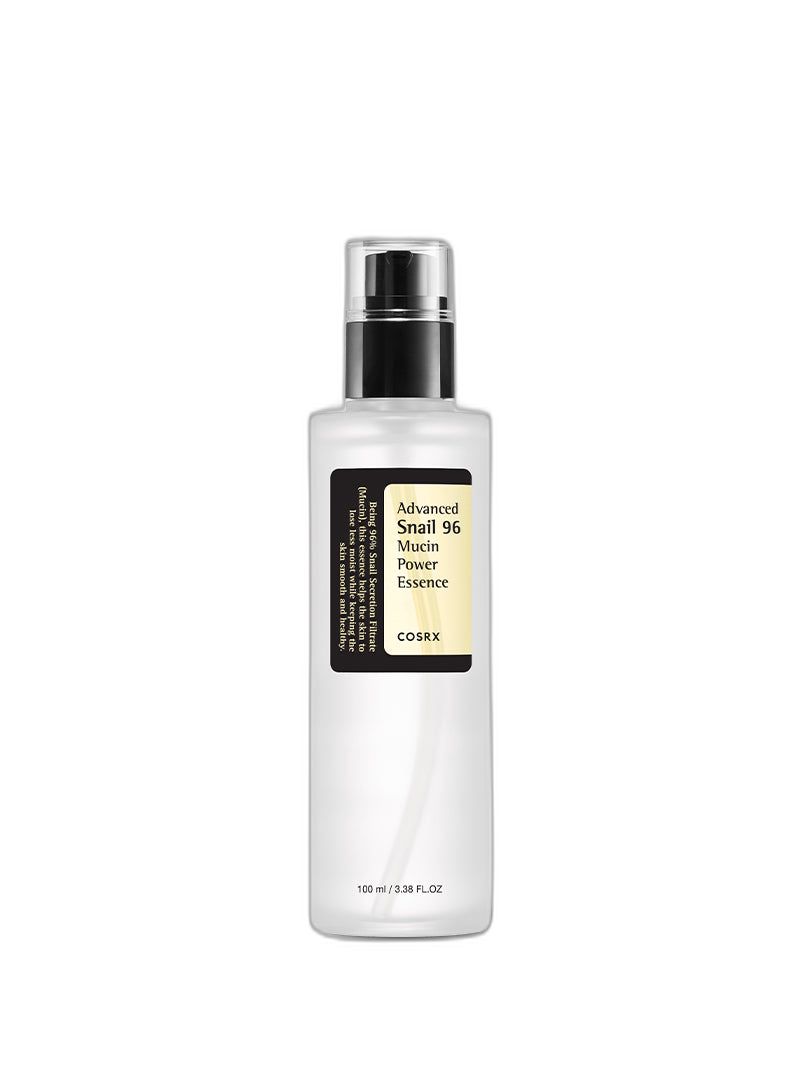
Best overall. COSRX Advanced Snail 96 Mucin Power Essence. The gold standard. 96% snail secretion filtrate, minimal filler ingredients, widely available, and affordable.
Best cream format. COSRX Advanced Snail 92 All in One Cream. For people who prefer a cream texture or want snail mucin as their moisturizer step.
Best for targeted repair. Mizon All in One Snail Repair Cream. Higher concentration of other actives alongside snail mucin.
Best sheet masks. COSRX Advanced Snail Mucin Sheet Mask. A good way to try snail mucin without committing to a full bottle.
The Bottom Line
Snail mucin is one of those ingredients that sounds gimmicky but is backed by real science and delivers consistent results. It’s not a miracle cure. It won’t erase deep wrinkles overnight or clear severe cystic acne. But as a daily-use hydration and repair product, it’s one of the most effective and versatile ingredients in the K-beauty toolkit.
We were skeptics. Now we’re converts. Give it six weeks and see for yourself.
For detailed product comparisons and rankings of 8 tested snail mucin products, see the Best Snail Mucin Products 2026 roundup on Glow Coded. And for the single most-asked head-to-head — COSRX’s snail essence versus Torriden’s Dive-In hyaluronic-acid serum — read COSRX Snail Mucin vs Torriden Dive-In Serum.