Heart Rate Zones Explained: Train Smarter, Not Harder
A complete guide to heart rate zone training. Understand the 5 zones, calculate your own, and learn how to use them to improve fitness, burn fat, and avoid overtraining.

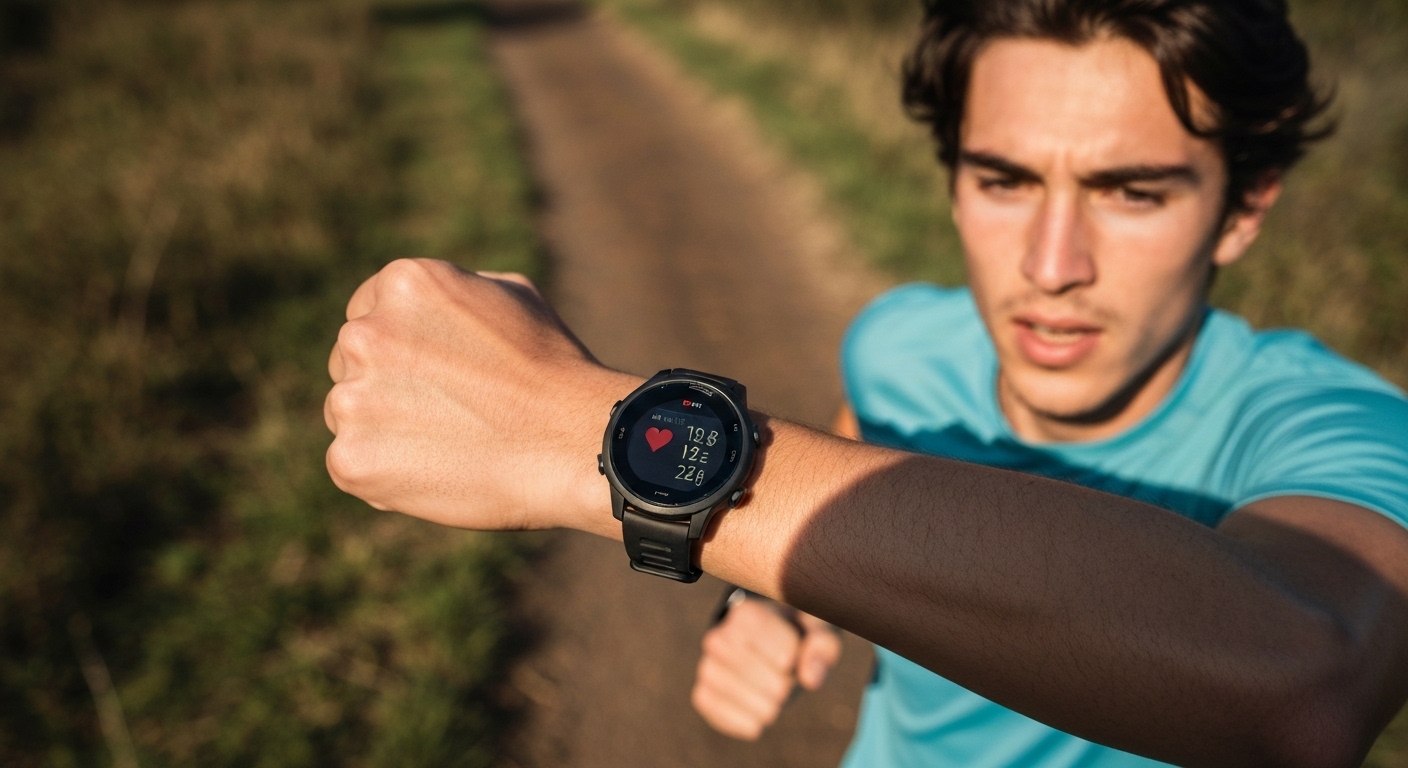
Most people exercise at the wrong intensity. They push too hard on easy days (turning recovery sessions into moderate efforts) and not hard enough on hard days (stopping before they reach the intensity that triggers adaptation). The result is a lot of time spent in the “gray zone” that produces minimal improvement.
Heart rate zone training solves this. By monitoring your heart rate during exercise, you can ensure you’re working at precisely the right intensity for your goal, whether that’s fat burning, endurance building, speed development, or recovery.
The 5 Heart Rate Zones
All zones are expressed as a percentage of your maximum heart rate (MHR).
Zone 1: Recovery (50-60% MHR)
Feels like. Walking or very light activity. Zero effort. Purpose. Active recovery. Promotes blood flow to muscles without adding stress. Use this on rest days. Duration. Indefinite. You could stay here all day.
Zone 2: Aerobic Base (60-70% MHR)
Feels like. Easy jogging. You can hold a full conversation. Purpose. Builds aerobic fitness, burns fat as primary fuel, develops mitochondrial density, promotes capillary growth. This is where you build your endurance engine. Duration. 30 minutes to several hours.
This is the most important zone for long-term fitness development. See our deep dive on Zone 2 training for the full science.
Zone 3: Tempo (70-80% MHR)
Feels like. Moderate effort. You can speak in short sentences but prefer not to. Purpose. Improves lactate threshold (the point at which lactic acid builds faster than your body can clear it). Useful in small doses. Duration. 20 to 40 minutes.
Zone 3 is the “gray zone.” Too hard for aerobic base building, not hard enough for maximum anaerobic adaptation. Most recreational exercisers spend too much time here.
Zone 4: Threshold (80-90% MHR)
Feels like. Hard. You can only say a few words at a time. Breathing is heavy. Purpose. Improves VO2max, lactate clearance, and high-intensity performance. This is interval training territory. Duration. 3 to 8 minutes per interval, with rest between.
Zone 5: Maximum (90-100% MHR)
Feels like. All-out effort. Cannot speak. Cannot maintain for more than a few minutes. Purpose. Develops absolute speed and power. Sprint training. Duration. 30 seconds to 2 minutes per effort.
How to Calculate Your Zones
Method 1: Age-Based Formula
220 minus your age = estimated MHR.
Example: 35 years old. 220 - 35 = 185 MHR.
- Zone 1: 93 - 111 bpm
- Zone 2: 111 - 130 bpm
- Zone 3: 130 - 148 bpm
- Zone 4: 148 - 167 bpm
- Zone 5: 167 - 185 bpm
Important. This formula is a rough estimate. Individual variation can be 10 to 20 beats in either direction.
Method 2: Field Test (More Accurate)
Warm up for 10 minutes. Then run or cycle as hard as you can sustain for 3 minutes (ideally uphill). Your peak heart rate during those 3 minutes is close to your true MHR. Calculate zones from this number.
Method 3: Lab Test (Most Accurate)
A sports performance lab can measure your exact MHR and lactate thresholds. Costs $100 to $300 but provides the most accurate zones.
How to Structure Your Training Week
For general fitness (3 to 4 sessions per week):
- 2 to 3 Zone 2 sessions (30 to 60 minutes each)
- 1 Zone 4 session (intervals: 4 to 6 x 3-4 minutes hard, with 2-3 minutes easy between)
For endurance (4 to 5 sessions per week):
- 3 to 4 Zone 2 sessions (including one long session of 60 to 90 minutes)
- 1 Zone 4/5 session (intervals or tempo)
For weight loss:
- Focus on Zone 2 (fat burning zone). 3 to 4 sessions of 45 to 60 minutes.
- Add 1 Zone 4 interval session (high-intensity boosts metabolism for hours post-exercise)
The 80/20 Rule
Elite coaches (and the research behind them) recommend spending:
- 80% of training time in Zone 1 and 2
- 20% of training time in Zone 4 and 5
- Minimal time in Zone 3
This distribution produces superior results to training at moderate intensity every session. The easy days need to be genuinely easy, and the hard days need to be genuinely hard.
Equipment
Chest strap heart rate monitor. The most accurate option. Polar H10 or Garmin HRM-Pro are industry standards. Reads heart rate via electrical signals from your chest.
Wrist-based optical HR. Built into most smartwatches (Apple Watch, Garmin, etc.). Convenient but less accurate, especially during high-intensity or wrist-bending activities.
No equipment. Use the talk test. Zone 2 = full conversation. Zone 3 = short sentences. Zone 4 = a few words. Zone 5 = can’t speak.
Common Mistakes
Living in Zone 3. The most common mistake. Every run feels “kind of hard.” You never go easy enough to build your base or hard enough to trigger speed adaptation. Break out of the gray zone.
Ignoring Zone 2 because it feels too easy. Your ego says it’s not a workout. The science says it’s the most important zone for long-term fitness.
Doing intervals too often. High-intensity work requires recovery. More than 2 interval sessions per week increases injury and burnout risk without proportional benefit.
Not adjusting for conditions. Heat, humidity, altitude, caffeine, sleep quality, and stress all affect heart rate. On hot days, your heart rate will be higher at the same effort level. Adjust your pace to stay in the target zone.
Heart rate zone training is the difference between exercising randomly and training with purpose. It takes the guesswork out of intensity and ensures that every session contributes to your goals.
For the complete picture on how to start a running practice, see our beginner’s guide.
Related reading: Functional Fitness for Real Life
Related reading: Zone 2 Cardio for Beginners: Heart Rate Guide 2026 — a dedicated beginner’s guide to finding your Zone 2 and building a sustainable training habit around it